Ricciardo's Red Bull Curiosity: The Verstappen Hypothesis
Ricciardo admits a lingering Red Bull curiosity over staying to face Verstappen — one of F1's greatest 'what if' scenarios explored in depth.
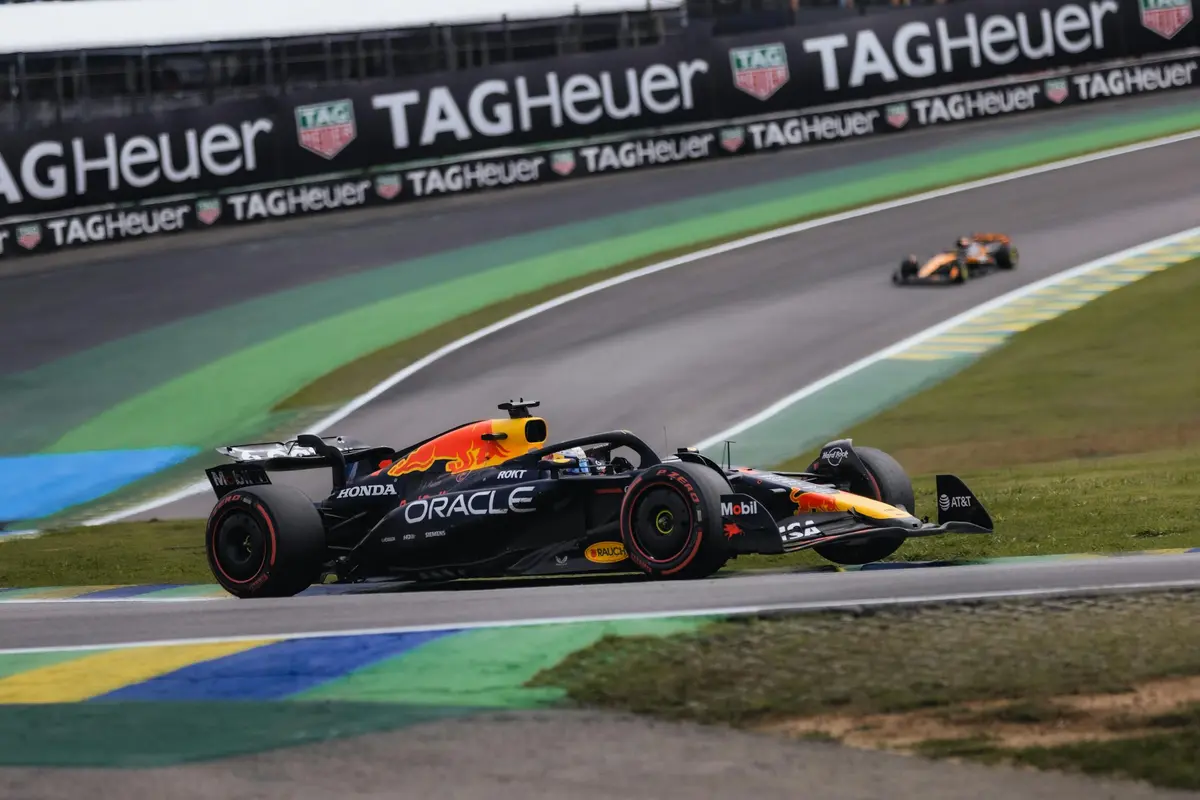
Ricciardo Opens Up on His Red Bull Curiosity
Daniel Ricciardo has never been one to shy away from introspection, and in a candid recent admission, the Australian has revealed that a lingering Red Bull curiosity continues to occupy his thoughts — specifically, how his Formula 1 career might have looked had he chosen to stay at Red Bull rather than depart for Renault back in 2018. Speaking openly, Ricciardo acknowledged that while he understands the immense difficulty of going head-to-head with Max Verstappen over a sustained period, the hypothetical still fascinates him. It is a question that resonates deeply with F1 fans and analysts alike, touching on talent, team dynamics, and the career paths that define legacies.
Detailed Analysis: What the Ricciardo Hypothesis Really Means
The Weight of the 'What If'
Ricciardo's Red Bull curiosity is not simply nostalgic musing — it reflects one of the most compelling 'what if' scenarios in modern Formula 1 history. When Ricciardo departed Red Bull at the end of the 2018 season, he left behind a team that would go on to become one of the most dominant forces in the sport's history. Max Verstappen, his former teammate, subsequently evolved into a multi-World Champion, redefining the benchmark for what a Red Bull driver could achieve. The question of whether Ricciardo could have matched, challenged, or even derailed that trajectory is genuinely fascinating from an analytical standpoint.
It is worth remembering that Ricciardo was no pushover during his time alongside Verstappen. He out-qualified and out-raced the Dutchman on multiple occasions, famously delivering victories at Monaco in 2018 — a race often cited as one of the greatest drives of his generation. His raw pace was never in doubt. The issue, as many analysts noted at the time, was the trajectory: Verstappen was improving at a frightening rate, while the team's technical and political gravity appeared to be shifting toward the younger Dutchman. Ricciardo's decision to leave was, in many respects, entirely rational.
The Verstappen Factor
Ricciardo himself has acknowledged how tough being teammates with Verstappen would have been — and this honesty is revealing. Verstappen's ascent to dominance was not merely a product of machinery; it was driven by an exceptional technical partnership with Red Bull's engineering core and an unrelenting hunger that made him arguably the sport's greatest driver through the early-to-mid 2020s. Sustaining a competitive challenge against that, season after season, would have demanded everything from any teammate. History suggests very few drivers could have done so consistently. The psychological and technical demands of that environment are immense, even for a talent of Ricciardo's calibre.
In the context of the Red Bull curiosity, it is also important to consider what staying at Red Bull would have meant for Ricciardo's broader career arc. The years following his departure were turbulent — a difficult stint at Renault, a move to McLaren that promised much but ultimately underdelivered, and a return to Red Bull in a reserve and development capacity that never truly reignited his top-level career. The alternate timeline in which he remained at Milton Keynes, fighting from within, is genuinely one of the sport's great unanswerable questions.
Red Bull's 2026 Reality
Fast-forward to 2026, and Red Bull remains one of the sport's powerhouse teams, now fielding Max Verstappen alongside exciting rookie Isack Hadjar. The team has navigated the seismic 2026 technical regulation changes — which introduced a fundamentally new aerodynamic philosophy including Active Aero (a system where bodywork elements adjust dynamically to balance drag and downforce at different circuit points) — with characteristic ambition. Ricciardo's comments, while rooted in personal reflection, arrive at a moment when Red Bull's team structure and driver philosophy are once again under scrutiny as the new regulations reshuffle the competitive order.
Context: The 2026 Season Narrative
The 2026 Formula 1 season has ushered in one of the most significant regulatory overhauls in the sport's history, with new power unit regulations and revised aerodynamic rules reshaping every team's performance envelope. Against this backdrop, conversations about legacy, career choices, and missed opportunities carry a particular resonance. Ricciardo's Red Bull curiosity reminds us that Formula 1 careers are shaped not only by speed and skill, but by timing, politics, and decisions made under enormous pressure. As the current grid adapts to the new era, the stories of those who once defined the sport — and the roads not taken — remain central to understanding what makes F1 uniquely compelling. Ricciardo's honesty adds a human dimension to a sport that can often feel purely technical.
Key Takeaways
- Daniel Ricciardo has admitted that his Red Bull curiosity — wondering what his career would have looked like had he stayed — remains a genuine fascination for him.
- Ricciardo openly acknowledged the extreme difficulty of sustaining a competitive challenge against Max Verstappen, reflecting the Dutchman's exceptional rate of development during their shared years at the team.
- His departure from Red Bull in 2018 preceded one of the most dominant periods in the team's history, making the 'what if' scenario all the more thought-provoking for fans and analysts.
- In 2026, Red Bull continues to operate as a front-running team with Verstappen and Hadjar, making Ricciardo's reflections a timely reminder of the team's enduring elite status.
Frequently Asked Questions
Why did Daniel Ricciardo leave Red Bull Racing in 2018?
Ricciardo left Red Bull at the end of the 2018 season, widely reported to be due to a combination of concerns about his standing within the team relative to Verstappen, desire for a new challenge, and the financial and personal appeal of the Renault project. The decision was one of the most debated moves in modern F1 history.
Has Red Bull Racing ever addressed what role Ricciardo could have played at the team long-term?
Red Bull's senior leadership, including former team principal Christian Horner, have spoken at various points about their respect for Ricciardo's talent. However, the team's long-term investment in Verstappen as their cornerstone driver made the pathway for a second top-tier seat at Red Bull increasingly complex to navigate for any driver in that era.
How does Red Bull Racing's 2026 driver lineup compare to the Ricciardo-Verstappen era?
In 2026, Red Bull fields Max Verstappen alongside Isack Hadjar, a highly-rated young French-Algerian driver making his Formula 1 debut. The pairing reflects Red Bull's continued philosophy of pairing their established star with an ambitious junior talent — a dynamic that echoes, in some ways, the structure that defined the Ricciardo-Verstappen years, albeit in a completely new technical era.
Conclusion: A Legacy Question That Never Fades
Daniel Ricciardo's candid reflection on his Red Bull curiosity is a reminder that Formula 1 is as much about the decisions made off the track as those made on it. His acknowledgement that facing Verstappen would have been brutally difficult shows a self-awareness that is both refreshing and revealing. As Red Bull continues to compete at the front of the 2026 grid with Verstappen leading the charge alongside Isack Hadjar, Ricciardo's words serve as a poignant footnote to one of the sport's great 'what if' stories. In a season defined by radical change, the echoes of the past remind us how profoundly career choices shape Formula 1 legacies.
In this article