Reutemann’s Mutiny at Jacarepaguá: The 1981 Brazilian Grand Prix Scandal
Carlos Reutemann defied Williams team orders on March 29, 1981, sparking a legendary feud with teammate Alan Jones in the Brazilian rain.
29 March 20263 min read
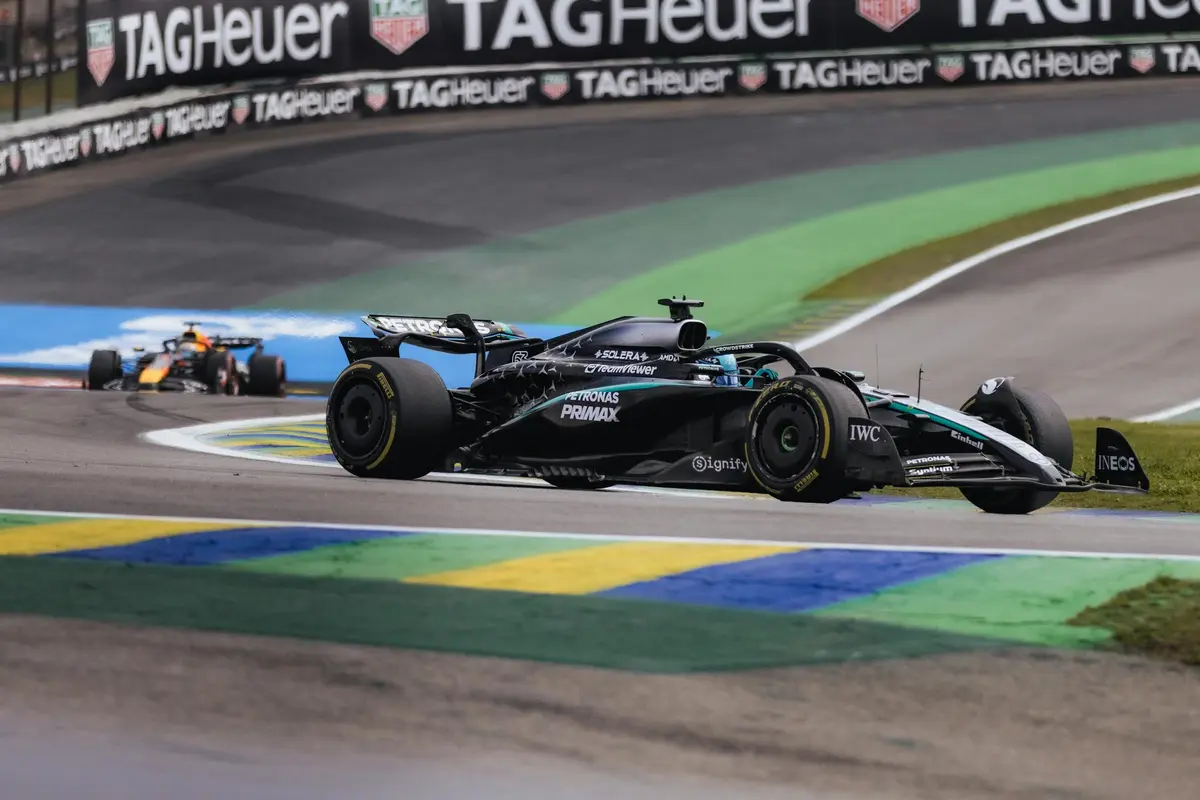
On This Day: On This Day, March 29, 1981, Carlos Reutemann ignited a fierce civil war within the Williams team by defying pit signals to win the Brazilian Grand Prix. Steering his Williams FW07C through a tropical downpour at Jacarepaguá, Reutemann ignored the explicit 'JONES-REUT' order to let reigning champion Alan Jones pass,...
On This Day, March 29, 1981, Carlos Reutemann ignited a fierce civil war within the Williams team by defying pit signals to win the Brazilian Grand Prix. Steering his Williams FW07C through a tropical downpour at Jacarepaguá, Reutemann ignored the explicit 'JONES-REUT' order to let reigning champion Alan Jones pass, forever fracturing the team’s internal harmony.
On This Day, March 29, 1981, Carlos Reutemann ignited a fierce civil war within the Williams team by defying pit signals to win the Brazilian Grand Prix. Steering his Williams FW07C through a tropical downpour at Jacarepaguá, Reutemann ignored the explicit 'JONES-REUT' order to let reigning champion Alan Jones pass, forever fracturing the team’s internal harmony.
The Ground Effect War in Rio
By the second round of the 1981 season, the Formula 1 paddock was already thick with tension. The ground effect era was at its peak, with the Williams FW07C standing as the benchmark of aerodynamic efficiency. However, the atmosphere inside the Frank Williams-led outfit was cold. Carlos Reutemann, the enigmatic Argentine, had joined the team under a contract that ostensibly positioned him as the number two driver to the gritty Australian, Alan Jones. As the field lined up under the looming clouds of Rio de Janeiro, the mechanical purity of the Ford-Cosworth DFV V8 engines provided the soundtrack to what would become one of the most controversial afternoons in Grand Prix history. When the heavens opened, the Jacarepaguá circuit became a skating rink, testing the raw car control of the world's best drivers without the safety net of modern electronics.The Signal That Changed Everything
Carlos Reutemann led from the start, masterfully navigating the standing water. Behind him, Alan Jones chased hard, expecting his teammate to adhere to the pre-arranged hierarchy. With the race nearing its two-hour limit due to the treacherous conditions, the Williams pit wall hung out a sign: 'JONES-REUT'. The instruction was clear—Reutemann was to slow down and allow the World Champion to take the victory. Reutemann, perhaps sensing this was his best chance at a title, stared straight ahead through his visor. Lap after lap, he passed the pit board, and lap after lap, he refused to lift. When the chequered flag fell, Reutemann crossed the line first, securing a brilliant but pyrrhic victory. The podium that followed was one of the frostiest in history; Alan Jones refused to attend, fuming at what he perceived as a stab in the back.Legacy of Defiance
This act of rebellion secured Carlos Reutemann the win, but it cost him the total support of his team. Frank Williams was a man of his word, and the breach of contract sat heavily with the management. While Reutemann would lead the championship for much of 1981, many historians argue that the psychological rift created on this day in March ultimately cost him the title by a single point in the season finale. In an era of unshielded cockpits and mechanical grit, the 1981 Brazilian Grand Prix remains the ultimate study in driver psychology and the ruthless pursuit of glory. #F1 #F1History #RetroF1 #TifosiIn this article