Red Bull Racing Critiques 2026 F1 Car Designs Amid FE Row
Red Bull Racing faces criticism from Formula E stars as the debate over the 2026 F1 car designs and electrification intensifies in the paddock.
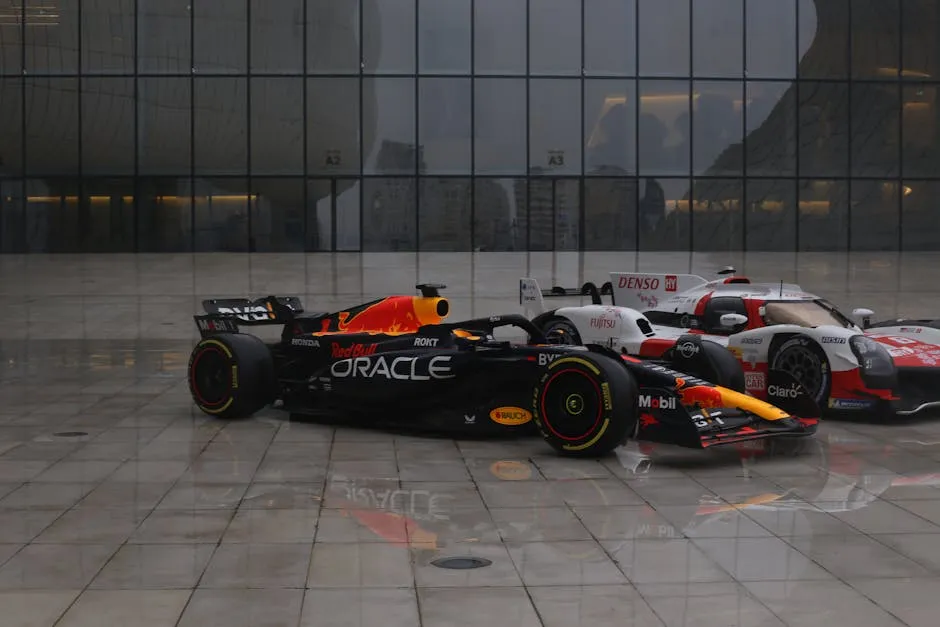
The 2026 Technical Divide: Red Bull Racing Under the Microscope
As the 2026 Formula 1 season progresses, the paddock remains embroiled in a heated debate regarding the fundamental philosophy of the current regulations. Today, Tuesday, March 24, 2026, the conversation has shifted from the track to the very identity of the sport. Red Bull Racing, led by the outspoken Max Verstappen and the promising Isack Hadjar, has found itself at the center of a controversy involving the 2026 F1 car designs. The tension reached a boiling point following comments from a prominent Formula E star, who urged F1 teams to stop using the electric series as a derogatory benchmark for the new hybrid era.
The 2026 regulations were designed to achieve a 50/50 power split between the Internal Combustion Engine (ICE) and the Energy Recovery System (ERS). However, this shift toward heavy electrification has led to persistent comparisons with Formula E, a comparison that Red Bull Racing has occasionally leveraged to highlight their concerns over energy management and car weight. The recent pushback from the Formula E community suggests that the narrative of F1 "losing its soul" to electrification is becoming a point of friction between the two premier FIA championships.
Detailed Analysis: The Engineering Friction of 2026 F1 Car Designs
The core of the issue lies in how the 2026 F1 car designs handle energy deployment. Under the leadership of Team Principal Laurent Mekies, Red Bull Racing has had to navigate the complexities of the new Power Unit regulations. The 2026 cars utilize Active Aero—a system of movable front and rear wings that adjust in real-time to minimize drag on straights and maximize downforce in corners—to compensate for the potential "clipping" (energy exhaustion) at high speeds.
Red Bull’s technical department has been vocal about the challenges of the Manual Override system. This is a driver-controlled electrical boost available to the following car once they exceed a certain speed threshold, effectively replacing the traditional DRS. Critics, including Verstappen, have argued that this makes the racing feel artificial, akin to the "Attack Mode" seen in Formula E. However, the technical reality is far more complex. The 2026 cars require a sophisticated Boost Button strategy, where drivers must decide whether to deploy their limited MGU-K reserves for defense or save them for a tactical Manual Override strike later in the lap.
The Formula E star’s intervention highlights a defensive stance: that F1’s struggle with its new identity should not be blamed on the technology itself, but rather on how F1 has chosen to implement it. For Red Bull, the struggle is twofold: maintaining their aerodynamic supremacy while integrating a Power Unit that demands a completely different driving style from the high-downforce, high-fuel-flow era of 2022-2025.
Context: Red Bull’s Narrative in the 2026 Season
In the current 2026 landscape, Red Bull Racing is no longer the undisputed dominant force they once were. The transition to the new regulations has seen McLaren and Ferrari close the gap significantly. Max Verstappen has had to adapt his aggressive style to a more calculated, energy-conscious approach. Meanwhile, rookie Isack Hadjar has faced a steep learning curve, balancing the physical demands of these heavy cars with the mental load of managing the 2026 F1 car designs and their intricate energy recovery cycles.
The comparison to Formula E is particularly sensitive because F1 is attempting to maintain its status as the pinnacle of speed while adopting sustainable technologies. If the cars are perceived as "slow" or "restricted" by energy saving, the brand value of F1 takes a hit. Red Bull’s strategy has been to push the FIA for more freedom in energy deployment, arguing that the current constraints stifle the "gladiator" aspect of the sport that Verstappen embodies.
Key Takeaways
- Formula E Pushback: Electric series drivers are tired of F1 using FE as a negative comparison for the 2026 hybrid regulations.
- Red Bull’s Critique: Max Verstappen and Red Bull Racing remain the primary critics of the high-electrification and energy-management focus of the 2026 F1 car designs.
- Technical Hurdles: The integration of Active Aero and Manual Override continues to be the primary development battleground for Laurent Mekies’ squad.
- Energy Management: The 50/50 power split has forced a total redesign of racing strategies, with the Boost Button becoming as critical as the throttle pedal.
Frequently Asked Questions
How is Red Bull Racing adapting to the 2026 F1 car designs?
Red Bull Racing is focusing heavily on the integration of their new Power Unit with the Active Aero systems. Under Laurent Mekies, the team is prioritizing low-drag efficiency to ensure that Max Verstappen and Isack Hadjar do not suffer from energy "clipping" on long straights, which has been a recurring concern with the 2026 regulations.
Why does Max Verstappen criticize the 2026 regulations?
Verstappen’s primary criticism of the 2026 F1 car designs centers on the weight of the cars and the "simulated" feel of the racing. He has argued that the heavy reliance on the Manual Override and energy recovery makes the cars feel less like traditional F1 machines and more like high-tech energy management platforms.
Conclusion: The Road Ahead for Red Bull
As we look toward the next phase of the 2026 championship, the debate over the 2026 F1 car designs is unlikely to subside. Red Bull Racing finds itself in a precarious position: they must defend their technical choices while answering to the criticisms of both their drivers and the wider motorsport community. The Formula E star’s comments serve as a reminder that F1 is in a transitional phase, where the lines between traditional internal combustion and future electrification are permanently blurred. For Red Bull, the goal remains clear: master the energy cycle, or risk being left behind in this new, electrified era of Grand Prix racing.