Piquet’s Breakthrough: The 1980 US Grand Prix West Masterclass | Flashback
Nelson Piquet claimed his first Formula 1 victory on March 30, 1980, driving the ground-effect Brabham BT49 to dominance at the United States Grand Prix West.
30 March 20263 min read
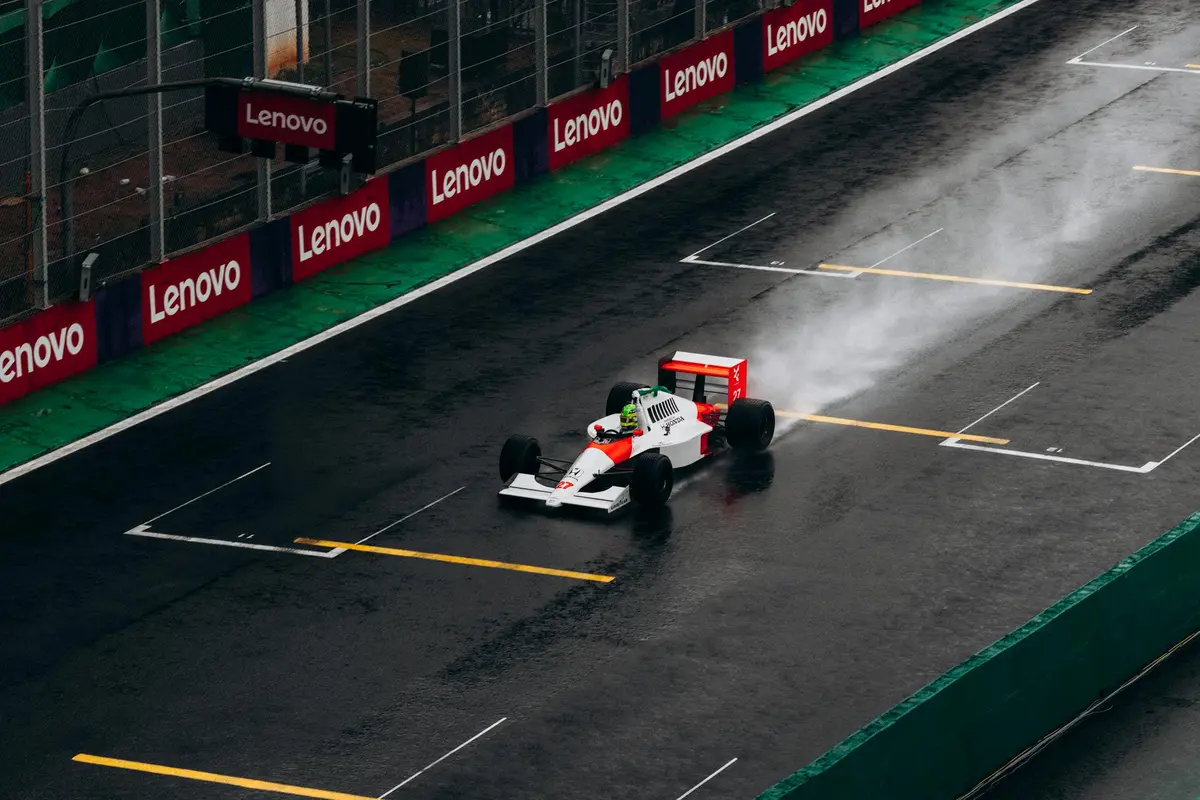
On This Day: On This Day on March 30, 1980, Nelson Piquet secured his maiden Formula 1 victory at the United States Grand Prix West. Driving the legendary Gordon Murray-designed Brabham BT49, the Brazilian dominated the streets of Long Beach from pole position, leading every single lap to signal the arrival of a...
On This Day on March 30, 1980, Nelson Piquet secured his maiden Formula 1 victory at the United States Grand Prix West. Driving the legendary Gordon Murray-designed Brabham BT49, the Brazilian dominated the streets of Long Beach from pole position, leading every single lap to signal the arrival of a future three-time World Champion.
On This Day on March 30, 1980, Nelson Piquet secured his maiden Formula 1 victory at the United States Grand Prix West. Driving the legendary Gordon Murray-designed Brabham BT49, the Brazilian dominated the streets of Long Beach from pole position, leading every single lap to signal the arrival of a future three-time World Champion.
The Ground-Effect Revolution and the Streets of Long Beach
By 1980, the technical landscape of Grand Prix racing was defined by the relentless pursuit of ground-effect aerodynamics. The Brabham BT49, powered by the ubiquitous and reliable Ford Cosworth DFV V8, was a masterpiece of packaging and aerodynamic efficiency. Designed by the visionary Gordon Murray, the BT49 utilized sliding skirts to seal the underbody against the asphalt, creating a low-pressure zone that sucked the car to the track. On the bumpy, concrete-lined streets of Long Beach, this mechanical grip was the difference between victory and the barriers. Nelson Piquet entered the weekend as a rising star but had yet to stand on the top step of the podium. His performance throughout the event was nothing short of flawless. He claimed pole position by a staggering margin, nearly a second clear of his nearest rival, showing that the Brabham-Cosworth package was perfectly dialed into the California street circuit. When the green flag dropped, Piquet launched cleanly, leaving the rest of the field to battle for the scraps in his wake.A Race of Attrition and Technical Precision
The 1980 United States Grand Prix West was a brutal test of mechanical endurance. In an era where manual gearshifts and heavy steering were the norm, the physical toll on the drivers was immense. While Piquet maintained a comfortable lead, the race behind him was chaotic. Defending champion Jody Scheckter struggled with his Ferrari 312T5, while Alan Jones in the Williams FW07—another ground-effect titan—pushed hard but could not bridge the gap to the flying Brabham. However, the day was marked by somber news that underscored the raw danger of the era. The veteran Swiss driver Clay Regazzoni suffered a horrific brake failure in his Ensign N180. The high-speed impact at the end of the Shoreline Drive straight resulted in spinal injuries that ended his illustrious career. It was a stark reminder that in 1980, the line between technical triumph and tragedy was razor-thin.The Legacy of the Nelson Piquet Brabham Era
Crossing the line nearly 15 seconds ahead of Riccardo Patrese, Nelson Piquet’s victory was a tactical masterclass. He managed his tires and his fuel load with the precision that would later define his championship-winning years. This win was not just a personal milestone; it was the moment the Nelson Piquet Brabham partnership became the most feared combination on the grid. With no electronic aids or semi-automatic gearboxes to assist him, Piquet’s win at Long Beach remains a pure expression of driver skill and aerodynamic engineering. The BT49 would go on to be one of the most successful chassis of the early 80s, eventually carrying Piquet to his first world title in 1981. This victory on March 30, 1980, was the spark that ignited one of the greatest careers in the history of the sport. #F1 #F1History #RetroF1 #F1TechIn this article