Mercedes Race Pace Dominates Japanese GP FP2 Analysis
McLaren topped the FP2 timesheets at Suzuka, but Mercedes' 'brutal' race pace suggests they are the team to beat for the 2026 Japanese Grand Prix.
The Suzuka Paradox: Speed vs. Stamina
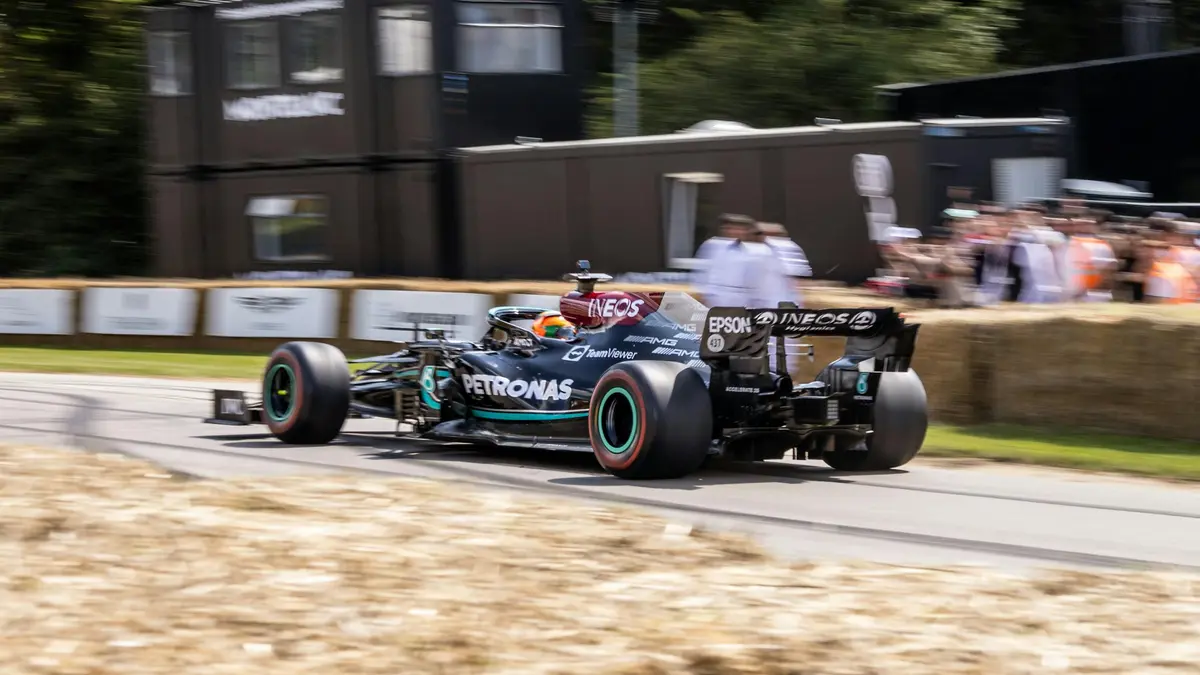
As the sun began to dip over the iconic Suzuka International Racing Course on Saturday, March 28, 2026, the timesheets told one story, but the telemetry told another. While McLaren’s Lando Norris and Oscar Piastri sat atop the leaderboard following the second free practice session (FP2) of the Japanese Grand Prix, the paddock was buzzing with a different realization. The Mercedes race pace exhibited during the final fifteen minutes of the session sent a chilling message to the rest of the grid: over a full Grand Prix distance, the Silver Arrows appear to be in a league of their own.
The 2026 season has already proven to be a technical minefield with the introduction of the new power unit regulations and advanced aerodynamics. However, Mercedes seems to have unlocked a level of efficiency that their rivals are currently struggling to match. While McLaren showcased impressive single-lap performance, the consistency and degradation levels seen from George Russell and Andrea Kimi Antonelli suggest that the W17 is a formidable long-run machine.
Technical Breakdown: Why Mercedes Race Pace is "Brutal"
To understand why the Mercedes race pace is being described as "brutal," one must look at the data from the high-fuel simulations. In the dying phases of FP2, both Russell and Antonelli were able to maintain lap times within a tenth of a second over a twelve-lap stint. In contrast, the McLaren duo saw their times drop off by nearly four-tenths as the tires reached their thermal threshold. This disparity is particularly significant at Suzuka, a track notorious for its high lateral loads and abrasive surface.
A key factor in this performance is the integration of the 2026 Active Aero systems. Active Aero refers to movable wing elements that adjust in real-time to balance downforce in corners and minimize drag on straights. Mercedes appears to have perfected the transition between these modes, allowing for a more stable platform during long runs. Furthermore, their management of the 50/50 power split between the Internal Combustion Engine (ICE) and the Electrical Recovery System (ERS) looked seamless. While other teams struggled with "clipping"—where the electrical energy runs out before the end of the straight—the Mercedes drivers had ample energy for the Manual Override mode. Manual Override is a driver-triggered power boost from the ERS designed to aid overtaking and defending.
Energy Management and the 2026 Power Unit
The 2026 regulations place a massive emphasis on energy harvesting. During FP2, the Mercedes race pace was bolstered by their superior harvesting under braking into the Casio Triangle. By maximizing the energy returned to the battery, Russell and Antonelli were able to utilize the Boost Button more frequently than their McLaren counterparts. The Boost Button is the cockpit interface used to engage the 2026 energy deployment strategies. This efficiency doesn't just provide top speed; it protects the rear tires by reducing the reliance on the ICE's torque curve during corner exit.
The 2026 Narrative: Mercedes Reclaiming the Throne
Entering the Japanese Grand Prix, the narrative of the 2026 season has been one of extreme technical competition. With Audi and Cadillac joining the fray, and Red Bull transitioning to their own power units with Isack Hadjar alongside Max Verstappen, the hierarchy has been fluid. However, the Mercedes race pace seen today suggests that the Brackley-based squad has regained the engineering high ground they enjoyed at the start of the hybrid era in 2014.
Team Principal Toto Wolff has remained cautious, noting that McLaren’s qualifying trim remains the benchmark. Yet, for George Russell and the sensational rookie Andrea Kimi Antonelli, the data provides immense confidence. If Mercedes can secure a front-row or even a second-row start in tomorrow's qualifying, their superior tire life and energy deployment should make them the heavy favorites for Sunday’s race. The "brutal" message mentioned by analysts isn't just about speed; it's about the psychological blow dealt to McLaren, who despite being fastest on paper, now face a daunting task to keep the Silver Arrows behind them over 53 laps.
Key Takeaways from FP2
- Long-Run Superiority: Mercedes demonstrated a 0.3s per lap advantage over McLaren during high-fuel simulations.
- Tire Management: The W17 showed significantly lower thermal degradation on the C3 compound compared to Ferrari and Red Bull.
- Energy Efficiency: Mercedes' ERS deployment strategy allowed for consistent use of the Manual Override without depleting the battery mid-lap.
- Rookie Watch: Andrea Kimi Antonelli matched veteran George Russell's pace within 0.050s during the race simulations, proving his readiness for the Suzuka challenge.
Frequently Asked Questions
How does the Mercedes race pace compare to their qualifying speed in 2026?
In the 2026 season, Mercedes has often prioritized race-trim stability over peak qualifying grip. While McLaren and Ferrari often challenge for pole position, the Mercedes W17 excels in maintaining tire pressures and energy harvesting over a full stint, often making them faster in race conditions than in a single-lap shootout.
What technical advantage gives Mercedes race pace an edge at Suzuka?
The primary advantage for Mercedes at Suzuka lies in their sophisticated Active Aero mapping. By optimizing the wing angles through the high-speed Esses, they reduce tire scrubbing, which preserves the life of the front-left tire—the most stressed tire at this circuit—allowing for a more consistent race pace.
Conclusion
While the headlines may focus on McLaren topping the FP2 charts, the underlying data from the Japanese Grand Prix suggests a shift in momentum. The Mercedes race pace is the definitive talking point heading into the business end of the weekend. If the Silver Arrows can translate this long-run dominance into a strategic masterclass on Sunday, the rest of the 2026 field will have a massive gap to close. All eyes now turn to Saturday's qualifying, where we will see if McLaren can use their single-lap edge to negate the brutal efficiency of the Mercedes machine.