Mercedes Front-Wing Investigation: 2026 Active Aero Controversy
Mercedes F1 faces an FIA probe over a 'two-phase' front-wing mechanism that may exploit 2026 active-aero rules. Read the full technical breakdown.
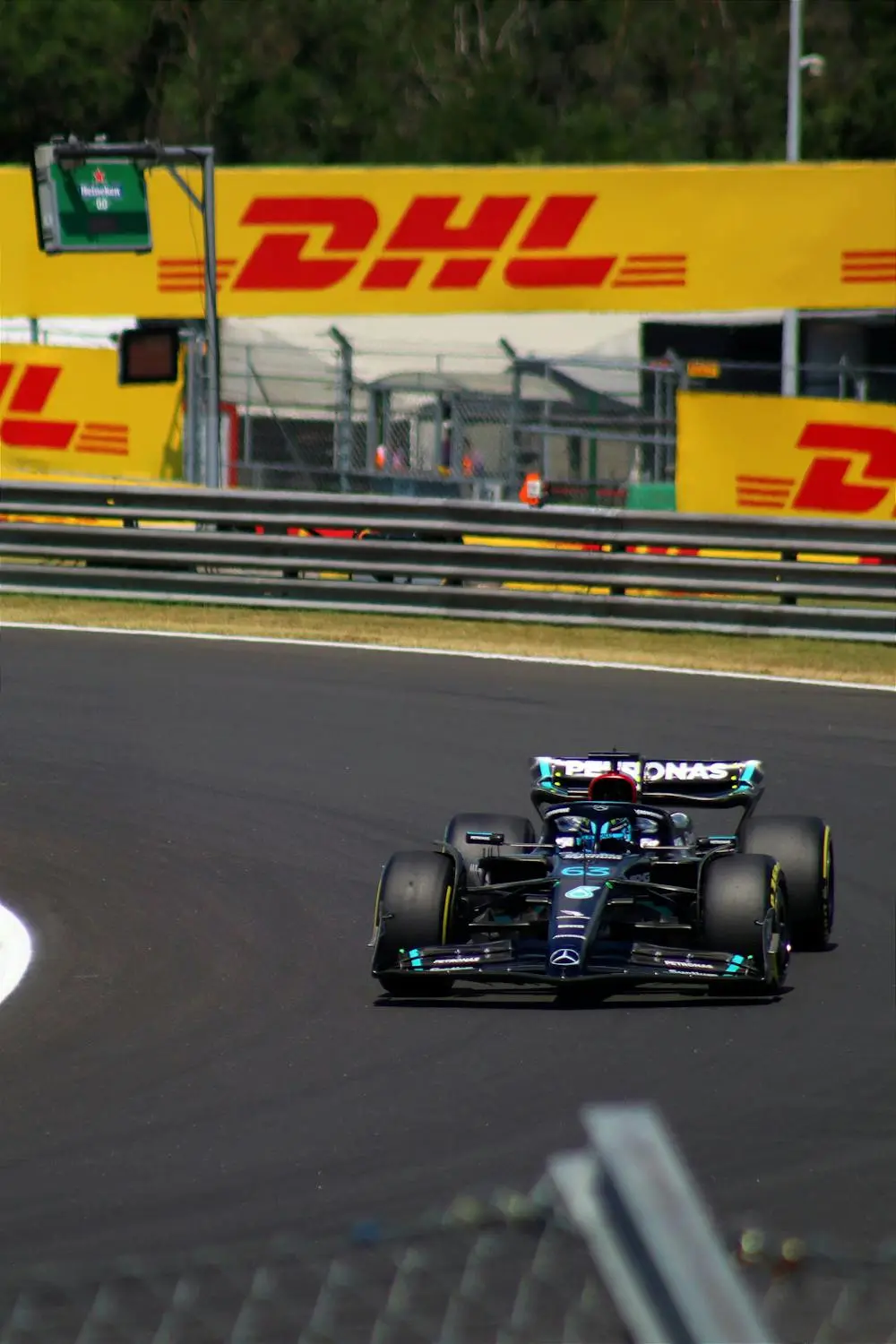
The Technical Storm Brewing in the 2026 Paddock
As the 2026 Formula 1 season enters its critical early phase, the technical battleground has shifted from the power units to the intricate nuances of active aerodynamics. On this Wednesday, March 25, 2026, the paddock is abuzz with reports regarding the Mercedes Front-Wing. Specifically, rumors have surfaced suggesting that the Brackley-based squad may have developed a sophisticated "two-phase" closure mechanism. This system is allegedly designed to circumvent the strict intent of the FIA’s new-for-2026 active-aerodynamics regulations, which were introduced to balance drag reduction with cornering stability.
The 2026 regulations represent the most significant technical shift in the sport's history, mandating movable front and rear wing elements to facilitate "X-mode" (low drag) and "Z-mode" (high downforce) configurations. However, the Mercedes Front-Wing design appears to operate with a non-linear transition that has rival technical directors, including those at Ferrari and Red Bull, raising eyebrows. If the mechanism provides an intermediate aerodynamic state not explicitly defined by the FIA, Mercedes could be gaining a massive advantage in high-speed stability without the traditional drag penalty.
Detailed Analysis: The Two-Phase Mechanism Explained
To understand the controversy surrounding the Mercedes Front-Wing, one must first understand the 2026 aerodynamic philosophy. Active Aero refers to the system where wing elements move dynamically to reduce drag on straights and increase downforce in corners. The reports suggest that Mercedes has engineered a wing that does not simply flip between two states but utilizes a two-phase closure. This could mean the wing sheds load in a staggered fashion, potentially allowing George Russell and Andrea Kimi Antonelli to carry more speed through transitional corners where a full "X-mode" deployment would be too unstable.
Technically, this involves the interaction between the mechanical actuators and the aero-elasticity of the carbon fiber. In F1 terms, a "Manual Override" is a driver-triggered boost of electrical energy, but if Mercedes has found a way to pair this with a bespoke aero-profile that "stalls" in stages, the efficiency gains would be exponential. By utilizing a two-phase approach, the Mercedes Front-Wing might be staying within the literal wording of the deflection tests while violating the "spirit" of the active-aero control maps mandated by the FIA. This is not merely about a flexing wing; it is about the timing and sequence of how that wing closes under load.
The implications for the W17 chassis are profound. If the FIA deems this mechanism a "moveable aerodynamic device" outside the scope of the standard control electronics, Mercedes could face a mandatory redesign. For a team currently battling the likes of McLaren and the Newey-led Aston Martin project, such a setback would be catastrophic for their championship aspirations.
Context: The 2026 Narrative and Competitive Stakes
The 2026 season has already proven to be a game of marginal gains. With the new 50/50 split between internal combustion and electrical power, aerodynamic efficiency is the primary differentiator. Mercedes, led by Toto Wolff, has been desperate to reclaim its dominant status. The pairing of the experienced George Russell with the sensational rookie Andrea Kimi Antonelli has put the team in a strong position, but they are facing stiff competition from Lewis Hamilton’s Ferrari and Max Verstappen’s Red Bull.
The Mercedes Front-Wing saga is reminiscent of the "f-duct" or "double-diffuser" controversies of years past. In the 2026 context, where teams are also managing the "Boost Button" (a 2026 feature providing a temporary increase in MGU-K output), having a wing that optimizes the car's balance during the transition from high-speed straights to technical sectors is the holy grail of engineering. If Mercedes has truly mastered a two-phase closure, they have effectively created a "third mode" for their car, giving them a versatility that their rivals currently lack.
Key Takeaways
- Regulatory Scrutiny: The FIA is investigating whether the Mercedes two-phase front-wing closure mechanism violates the 2026 active-aerodynamics framework.
- Technical Innovation: The system allegedly allows for a non-linear reduction in drag, providing a stability advantage in transitional cornering phases.
- Championship Impact: A potential ban or forced redesign could derail Mercedes' early-season momentum against Ferrari and Red Bull.
- Driver Advantage: Russell and Antonelli may be benefiting from a car that is more adaptable to the 2026 "X-mode" and "Z-mode" transitions than their competitors.
Frequently Asked Questions
Is the Mercedes Front-Wing currently legal?
As of March 25, 2026, the wing has passed all static deflection tests. However, the FIA is investigating whether the dynamic "two-phase" behavior of the wing during active-aero transitions complies with the technical directives governing movable aero elements.
How does the Mercedes Front-Wing affect George Russell and Kimi Antonelli?
The mechanism likely provides the drivers with a more predictable car balance during high-speed transitions. This allows them to be more aggressive with the 2026 Manual Override and Boost Button features, knowing the aero platform will remain stable.
What happens if the FIA rules against Mercedes?
If the two-phase mechanism is found to be outside the regulations, Mercedes will be forced to update their front-wing assembly to a standard single-phase transition. This would likely result in a loss of lap time and require a significant reallocation of their cost-cap resources.
Conclusion
The investigation into the Mercedes Front-Wing marks the first major technical flashpoint of the 2026 era. As the FIA gathers more data from the onboard sensors and high-speed cameras, the rest of the grid remains on high alert. Whether this is a stroke of genius from the Brackley engineers or a step too far into the regulatory grey area remains to be seen. One thing is certain: in the high-stakes world of 2026 Formula 1, the battle off the track is just as intense as the one on it. All eyes will be on the next technical delegate's report to see if Mercedes can maintain their innovative edge or if they will be forced back to the drawing board.