Ferrari Japanese GP Podium: Leclerc Defeats Russell
Charles Leclerc secures a brilliant podium for Ferrari at Suzuka, overcoming Mercedes' tactical pressure in a high-stakes 2026 Japanese Grand Prix.
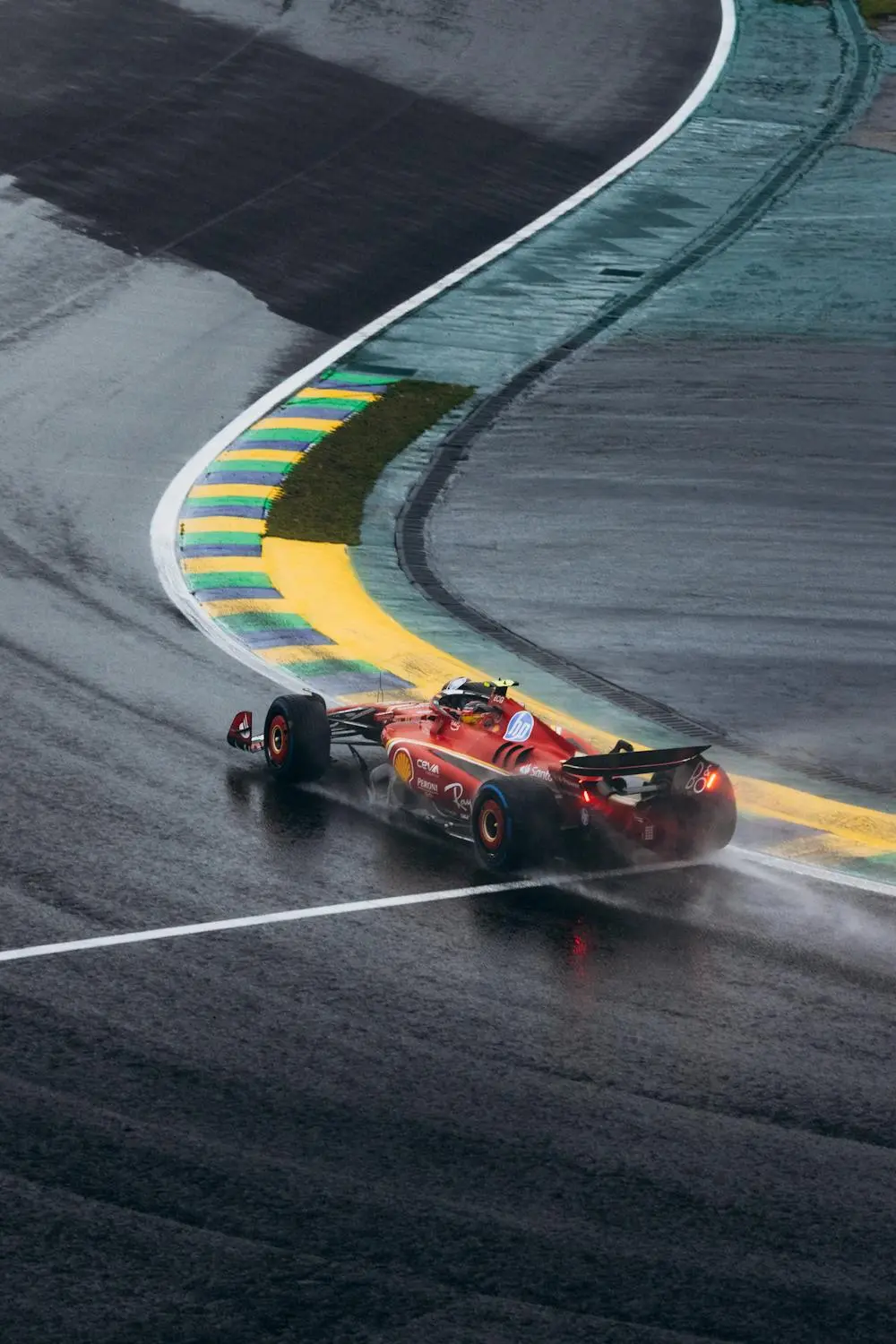
Leclerc Secures Hard-Fought Ferrari Japanese GP Podium
The 2026 Formula 1 season continues to deliver high-octane drama, and the latest chapter at Suzuka was no exception. Charles Leclerc secured a hard-fought Ferrari Japanese GP podium on Sunday, March 29, 2026, after a race-long duel that tested both his technical precision and his mental fortitude. In a season defined by radical new power units and sophisticated aerodynamics, Leclerc’s performance served as a reminder that the driver remains the most critical component in the cockpit. Facing intense pressure from Mercedes’ George Russell, the Monegasque driver showcased why he remains the spearhead of the Scuderia’s championship aspirations.
The race at Suzuka is notoriously difficult on tires and energy management, particularly under the 2026 regulations. Leclerc’s journey to the Ferrari Japanese GP podium was not merely a display of raw speed but a masterclass in defensive driving. As the laps wound down, the gap between the Ferrari and the pursuing Mercedes fluctuated, with Russell utilizing every tool at his disposal to unsettle the Ferrari driver. However, Leclerc remained composed, navigating the high-speed sweeps of the first sector and the technical challenges of the Casio Triangle with surgical accuracy.
Analysis: Resisting the 'Cheeky' Mercedes Mind Games
The closing stages of the Japanese Grand Prix were characterized by what Leclerc later described as 'cheeky' mind games from George Russell. Mercedes appeared to be using strategic radio transmissions and aggressive positioning to force a mistake from the Ferrari driver. Russell frequently closed the gap in the DRS zones—now supplemented by the 2026 Manual Override system—only to back off and attempt to overheat Leclerc’s rear tires by forcing him into defensive lines.
Technically, the battle was a fascinating study of the 2026 aero packages. Leclerc had to manage his Active Aero transitions perfectly; Active Aero refers to the movable front and rear wings that switch between high-downforce 'Z-mode' for corners and low-drag 'X-mode' for straights. By timing his deployments to neutralize Russell’s Manual Override—a driver-controlled energy boost available to the following car—Leclerc maintained just enough of a margin to prevent a clean overtake. The 'cheeky' nature of Russell’s attack included late lunges into the hairpin and dummy moves into 130R, designed to trigger Leclerc’s defensive instincts prematurely.
Ferrari’s pit wall, led by Frédéric Vasseur, played a pivotal role in this Ferrari Japanese GP podium. The team provided Leclerc with real-time data on Russell’s energy deployment, allowing him to save his own battery reserves for the critical run out of Spoon Curve. This tactical chess match highlighted the evolution of F1 in 2026, where psychological warfare is as prevalent as mechanical grip.
The 2026 Narrative: Ferrari’s Resurgence
This podium finish is a significant milestone for Ferrari in the 2026 championship standings. With the grid featuring heavyweights like Lewis Hamilton alongside Leclerc at Ferrari, and the emergence of Audi and Cadillac as serious competitors, every point is vital. The 2026 season has seen a shift in the hierarchy, with Red Bull’s Max Verstappen facing stiffer competition from a revitalized Ferrari and a persistent Mercedes squad.
Leclerc’s ability to hold off Russell also sends a clear message regarding the internal dynamics at Maranello. While Hamilton’s arrival has brought immense experience and media attention, Leclerc’s defensive masterclass at Suzuka reaffirms his status as a driver capable of winning under extreme duress. The Scuderia’s 2026 power unit has shown impressive reliability and peak power, which was evident as Leclerc fended off the Mercedes on the long start-finish straight.
Key Takeaways from Suzuka
- Defensive Excellence: Charles Leclerc demonstrated elite-level composure to secure the Ferrari Japanese GP podium despite constant pressure.
- Tactical Maturity: The use of Manual Override and Active Aero was decisive in maintaining track position against a faster-charging Mercedes.
- Psychological Warfare: George Russell’s 'cheeky' tactics failed to rattle Leclerc, highlighting the mental strength required in the 2026 era.
- Championship Implications: Ferrari continues to solidify its position as a frontrunner, keeping pace with Red Bull and McLaren in the constructors' race.
Frequently Asked Questions
How has Ferrari F1 adapted to the 2026 power unit regulations?
Ferrari has focused heavily on energy recovery efficiency and combustion stability. Their 2026 power unit is noted for its high electrical output, which Leclerc utilized effectively at Suzuka to defend against Russell’s Mercedes.
What is the significance of the Ferrari Japanese GP podium for Charles Leclerc?
This podium confirms Leclerc's ability to lead the team during high-pressure scenarios, especially with the added internal competition of having Lewis Hamilton as a teammate in the 2026 season.
How did Ferrari manage the Active Aero at Suzuka?
Ferrari’s software mapping allowed Leclerc to optimize the transition between high-downforce and low-drag modes, ensuring he had maximum grip through the 'S' Curves while remaining fast enough on the straights to defend his position.
Conclusion
The 2026 Japanese Grand Prix will be remembered as a race where strategy and psychology collided. Charles Leclerc’s Ferrari Japanese GP podium was a testament to his growth as a driver and Ferrari’s technical progress in this new era of Formula 1. By resisting the 'cheeky' maneuvers of George Russell, Leclerc not only secured a trophy but also a psychological victory over one of his primary rivals. As the paddock moves toward the next round, the momentum is firmly with the Scuderia. If Ferrari can continue to provide Leclerc with a car capable of such defensive resilience, the 2026 title fight is set to be one of the greatest in the history of the sport.