Jolyon Palmer: Red Bull Exodus Could Force Verstappen Exit
Jolyon Palmer warns the Red Bull personnel exodus makes Max Verstappen 'probably leaving the team at some point' — a claim with major 2026 F1 implications.
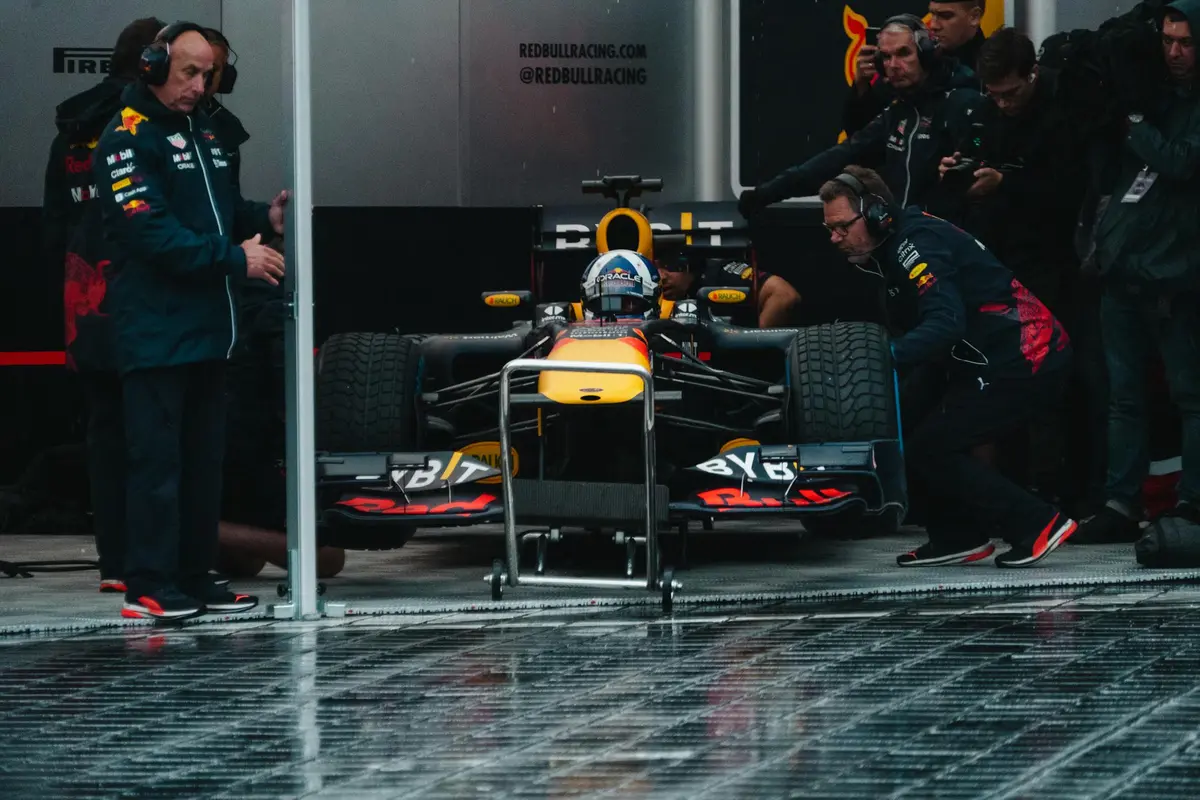
Palmer Warns Red Bull Personnel Exodus Makes Verstappen Departure 'Probable'
Former Formula 1 driver and respected analyst Jolyon Palmer has issued a stark warning about the long-term stability of Red Bull Racing, suggesting that a sustained wave of high-profile personnel departures from the Milton Keynes outfit could ultimately push four-time world champion Max Verstappen out of the team. Speaking with characteristic candour, Palmer stated that the ongoing Red Bull personnel exodus makes Verstappen "probably leaving the team at some point" — a statement that carries enormous weight given the Dutchman's central role in the team's recent dominance of the sport.
The Red Bull Personnel Exodus: What It Means for the Team's Future
Red Bull Racing has long been regarded as one of the most technically sophisticated and operationally cohesive outfits in Formula 1. Much of that reputation was built not just on the talent of their drivers, but on the intellectual infrastructure around them — the engineers, strategists, aerodynamicists, and senior figures who quietly shaped championship-winning machinery season after season.
When key personnel begin to leave an organisation at a high rate, the consequences rarely materialise overnight. Instead, they tend to compound gradually, eroding the institutional knowledge, internal culture, and technical momentum that made the team competitive in the first place. Palmer's assertion taps directly into this concern. It is not a single departure that triggers alarm — it is the pattern, the frequency, and the seniority of those walking out the door.
In a highly regulated sport like Formula 1, where continuity across technical departments is critical to maintaining a performance edge — particularly under the sweeping 2026 technical regulations that have reshaped car architecture entirely — losing experienced minds can have consequences that take years to fully surface. The 2026 regulations introduced active aerodynamics and an overtake boost system, demanding a new breed of engineering philosophy. Any team navigating this landscape with a depleted senior workforce faces a steeper climb than most.
Why Verstappen's Future at Red Bull Is Now Under Scrutiny
Max Verstappen's relationship with Red Bull has always been transactional in the most professional sense: as long as the team provides him with a car capable of winning championships, the partnership thrives. His four world titles are testament to that arrangement working in its most potent form. But drivers of Verstappen's calibre rarely tolerate stagnation, and if the Red Bull personnel exodus continues to hollow out the technical department, the competitive calculus that keeps him at the team could shift decisively.
Palmer's framing of Verstappen's exit as "probable" rather than certain is important. It acknowledges that the situation is not irreversible — Red Bull can still act to stabilise personnel, attract new talent, and rebuild internal structures. But Palmer's credibility as a former F1 driver and analyst gives this assessment a weight that cannot simply be dismissed as speculation. He is identifying a structural vulnerability that observers have quietly noted for some time.
In the context of the current 2026 grid, Verstappen's potential availability would represent one of the most seismic transfer stories in modern Formula 1. Teams including Mercedes — now running George Russell alongside Andrea Kimi Antonelli in his second season — and others would likely circle immediately. However, any such move remains speculative at this stage, and Palmer's comments are rooted in a pattern of concern rather than confirmed intent.
The Broader Implications for F1 2026 Competition
Red Bull's internal challenges arrive at a particularly delicate moment. The 2026 season represents a true reset across the entire field, with new power unit regulations and revised aerodynamic philosophies giving every team — from established giants to newly rebranded Audi and the debuting Cadillac squad — an opportunity to close the gap or forge ahead. A Red Bull destabilised by internal turnover is a Red Bull that may struggle to exploit its historical advantages during this critical recalibration period.
For rivals, a weakened Red Bull is an opportunity. For Verstappen, however, a team in flux is simply a risk he may eventually decide is not worth carrying.
Key Takeaways
- Jolyon Palmer believes the Red Bull personnel exodus makes a Verstappen departure "probable" at some point.
- Sustained loss of senior personnel erodes institutional knowledge and technical momentum — critical factors in any team's long-term competitiveness.
- The 2026 regulation changes, including active aero and the overtake boost system, make engineering continuity more valuable than ever.
- Verstappen's continued presence at Red Bull has historically been tied to the team's ability to provide a championship-winning car.
- Palmer stops short of calling a Verstappen exit imminent, framing it as a probable outcome if the current trend continues unchecked.
- Any Verstappen availability on the transfer market would immediately reshape the entire F1 driver landscape.
Frequently Asked Questions
Why does Jolyon Palmer think Max Verstappen will leave Red Bull?
Palmer believes that the ongoing wave of high-profile personnel exits from Red Bull will progressively undermine the team's technical capability. If the team can no longer provide Verstappen with a competitive, championship-contending car, the four-time world champion will likely seek an environment that can — making his departure "probable" over time.
How does the Red Bull personnel exodus affect their 2026 F1 season?
The 2026 Formula 1 season introduced sweeping regulatory changes, including active aerodynamics and an overtake boost system. Successfully developing a car under these new rules requires deep engineering expertise and continuity. A significant loss of senior personnel makes it harder for Red Bull to maintain its historical technical edge during this pivotal regulatory transition.
Could Max Verstappen realistically join another F1 team in 2026 or beyond?
While Verstappen's future remains his own decision, Palmer's comments indicate that the conditions for a potential exit are developing. Any confirmed availability would make Verstappen the most sought-after driver on the market, with multiple top teams likely to pursue him. However, no move has been confirmed, and Palmer's assessment is framed as a probable long-term outcome rather than an imminent development.
Conclusion
Jolyon Palmer's warning about the Red Bull personnel exodus and its likely impact on Max Verstappen's future at the team deserves serious attention from the F1 community. While Verstappen remains one of the most dominant forces the sport has seen, even the greatest drivers are ultimately dependent on the organisations around them. If Red Bull cannot arrest the tide of departures and stabilise its internal structures, Palmer's assessment — that a Verstappen exit is probably coming — may prove to be one of the most prescient observations of the 2026 season.