Aston Martin: Jak Crawford FP1 Japanese GP Debut in AMR26
Jak Crawford is set to replace Fernando Alonso for FP1 at the Japanese Grand Prix, marking a pivotal moment for Aston Martin's 2026 development program.
The Strategic Importance of Jak Crawford’s FP1 Outing
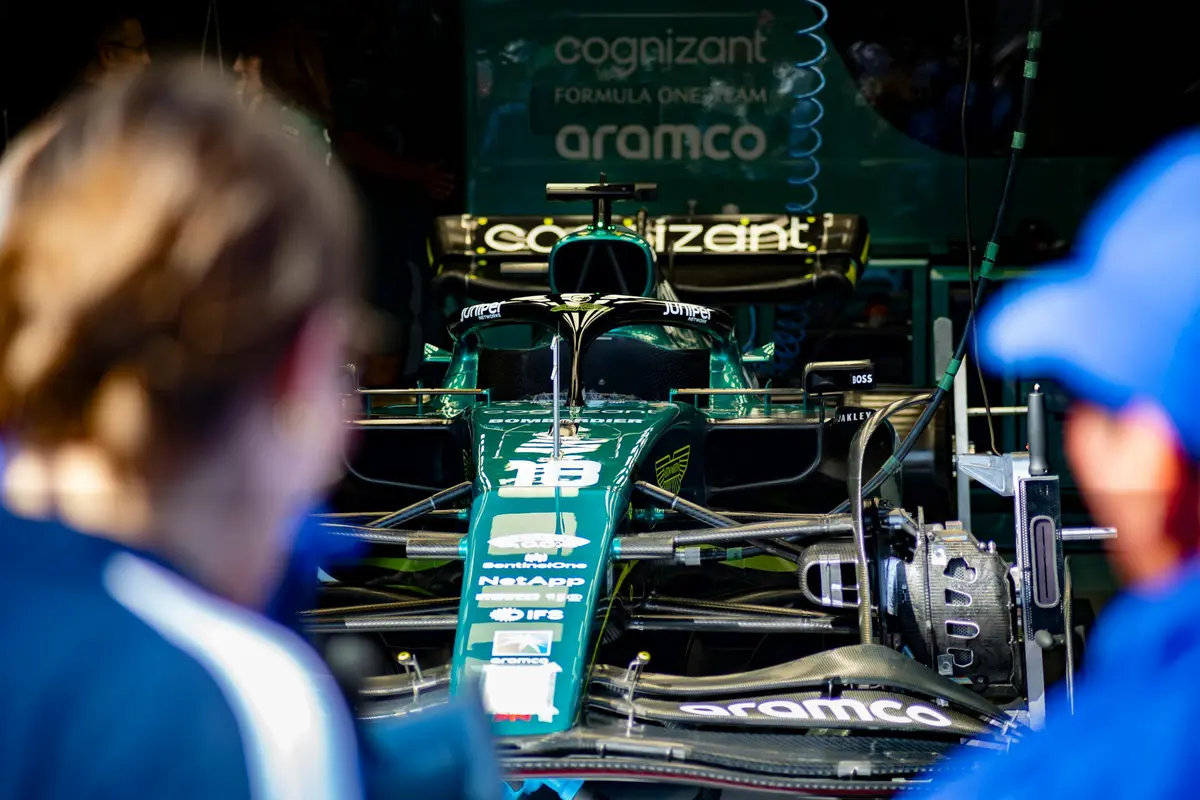
As the 2026 Formula 1 season gathers momentum, Aston Martin Aramco has officially confirmed that their highly-rated Third Driver, Jak Crawford, will take the wheel of the AMR26 for the opening session of the upcoming weekend. The Jak Crawford FP1 Japanese GP debut marks a significant milestone in the American driver’s career and a critical data-gathering exercise for the Silverstone-based squad. Crawford will step into the cockpit usually occupied by two-time World Champion Fernando Alonso, providing the veteran Spaniard with a brief respite while the team fulfills its mandatory young driver outing requirements.
The decision to run Crawford at Suzuka is far from arbitrary. The Japanese circuit is renowned for its technical complexity, featuring the iconic 'S' Curves and the high-speed 130R, making it one of the most demanding tracks for aerodynamic evaluation. For Aston Martin, the Jak Crawford FP1 Japanese GP session is not merely a promotional event; it is a high-stakes technical evaluation. With the 2026 regulations placing a premium on the integration of the new Power Units and sophisticated aero packages, having a fresh set of eyes—and a driver deeply embedded in the simulator program—can provide invaluable correlation data.
Technical Implications for the AMR26 at Suzuka
The AMR26, designed under the watchful eye of Technical Executive Adrian Newey, represents a radical departure from its predecessors. Central to its performance is the implementation of Active Aero—a system of movable wings that adjust in real-time to balance low drag on the straights with maximum downforce in the corners. During the Jak Crawford FP1 Japanese GP session, Crawford will be tasked with running specific aero-mapping programs to ensure the transition between these modes is seamless. Any oscillation or delay in the Active Aero deployment at a track as sensitive as Suzuka could compromise driver confidence and lap time.
Furthermore, the 2026 Power Units feature a near 50/50 split between internal combustion and electrical power. This requires a sophisticated energy management strategy, often involving the Manual Override—a driver-activated boost system that provides additional electrical deployment for overtaking or defending. Crawford’s feedback on the harvesting and deployment of this energy through the Degner curves and up the hill toward the Casio Triangle will be scrutinized by the engineering team. By comparing Crawford’s telemetry with that of Lance Stroll in the sister car, Aston Martin can fine-tune their software maps ahead of the critical qualifying session.
The role of the Third Driver has evolved significantly in 2026. No longer just a reserve, drivers like Crawford are integral to the development cycle. His familiarity with the virtual AMR26 in the simulator means he is uniquely positioned to identify discrepancies between the digital model and the physical car on the abrasive Suzuka tarmac. This correlation is the 'holy grail' for modern F1 teams, especially when navigating the first year of such transformative technical regulations.
The 2026 Narrative: Alonso, Newey, and the Future
In the broader context of the 2026 season, Aston Martin is positioning itself as a legitimate title contender. With the technical brilliance of Adrian Newey and the formidable driver pairing of Fernando Alonso and Lance Stroll, the team has the ingredients for success. However, the long-term future of the team also depends on nurturing talent. By placing Crawford in the car for the Jak Crawford FP1 Japanese GP, Team Principal Mike Krack and the leadership group are signaling their confidence in the American’s progression.
Fernando Alonso, ever the team player in this new era of Aston Martin, has been vocal about the importance of the junior program. While he relinquishes 60 minutes of track time, the data Crawford brings back could ultimately benefit Alonso’s race setup. In a season where the margins between the top teams—McLaren, Ferrari, and Red Bull—are razor-thin, these marginal gains in FP1 can dictate the outcome of the entire Grand Prix weekend. The 2026 grid is more competitive than ever, and every lap of testing is a precious commodity.
Key Takeaways
- Rookie Opportunity: Jak Crawford will replace Fernando Alonso for the opening practice session at Suzuka, fulfilling one of the team's mandatory rookie driver slots.
- Technical Focus: The session will focus on correlating simulator data with real-world performance, specifically regarding the AMR26’s Active Aero and 2026 Power Unit energy management.
- Strategic Timing: Choosing the Japanese Grand Prix for this outing allows the team to test their systems on one of the most aerodynamically sensitive tracks on the calendar.
- Future Prospects: This move reinforces Crawford’s status within the team and highlights Aston Martin’s commitment to developing their internal talent pool alongside their championship ambitions.
Frequently Asked Questions
Why is Jak Crawford driving in the Jak Crawford FP1 Japanese GP session instead of Fernando Alonso?
Under the current FIA regulations, every team must allocate at least two Free Practice 1 sessions per season to a driver who has not competed in more than two Grands Prix. Aston Martin has selected the Japanese Grand Prix for Jak Crawford to fulfill this requirement, allowing the team to gather fresh data while giving their junior driver elite-level experience.
What specific technical systems will Aston Martin test during Crawford's session?
The team will primarily focus on the AMR26's Active Aero systems and the Manual Override energy deployment. Because Crawford has spent hundreds of hours in the simulator, his primary goal is to ensure that the car's on-track behavior matches the predicted models, which is crucial for the 2026 technical regulations.
How does this FP1 outing impact Fernando Alonso’s weekend?
While Alonso loses track time in FP1, he will return to the car for FP2 with a wealth of data already collected by Crawford. In the 2026 era, teams often use the rookie driver to run "baseline" setups, allowing the primary driver to focus on performance optimization and long-run simulations later in the weekend.
Conclusion
The Jak Crawford FP1 Japanese GP outing is a calculated move by Aston Martin to maximize their development trajectory in a season defined by technical innovation. As the AMR26 takes to the track under the guidance of one of America’s brightest prospects, the eyes of the paddock will be on the telemetry screens. For Crawford, it is a chance to prove he belongs on the world stage; for Aston Martin, it is another step toward the front of the grid. As we move toward the competitive sessions of the Japanese Grand Prix, the insights gained during these 60 minutes could prove to be the difference between a podium finish and a missed opportunity.