Ferrari Straight-Line Speed Deficit to Mercedes Exposed
Ferrari's Fred Vasseur admits the team is trailing Mercedes in straight-line speed after the 2026 F1 season's opening rounds — analysis inside.
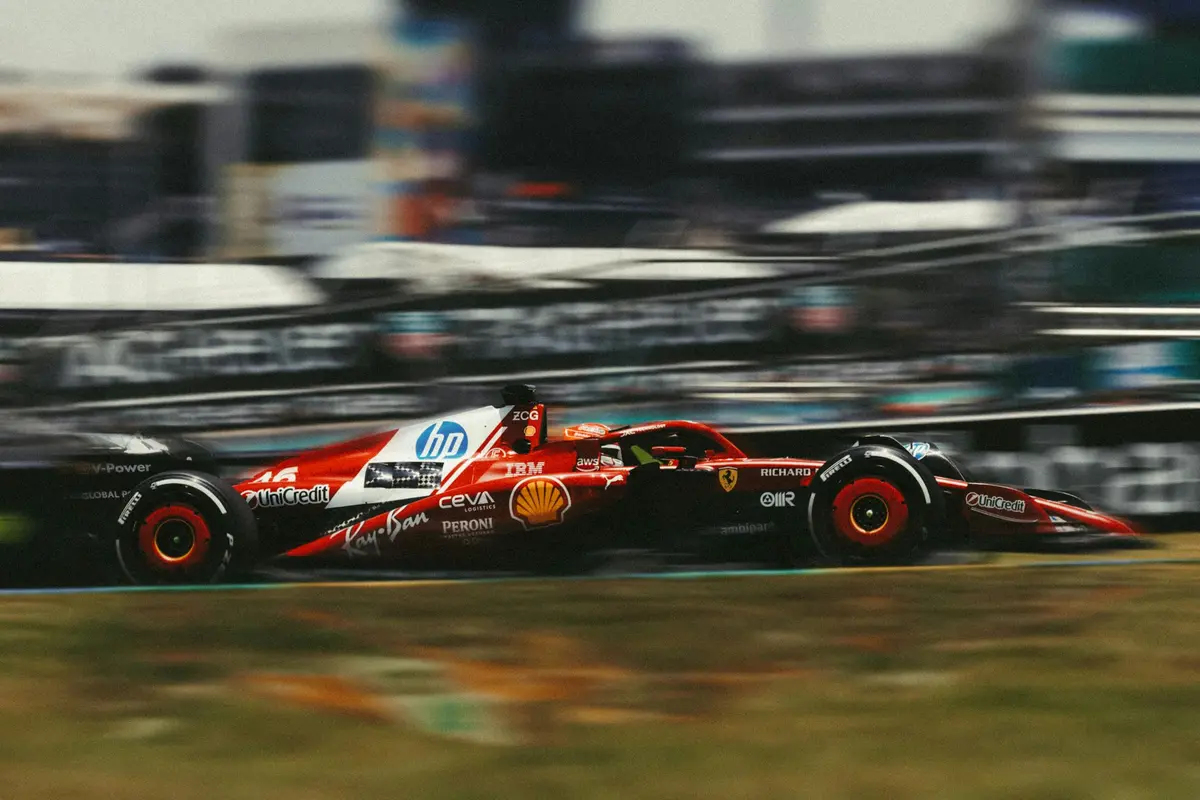
Ferrari Acknowledges Straight-Line Speed Gap to Mercedes in 2026
Ferrari Team Principal Fred Vasseur has publicly acknowledged that the Scuderia is trailing Mercedes in straight-line speed after the opening rounds of the 2026 Formula 1 season. The admission is a significant one — candid, measured, and strategically timed. Vasseur's willingness to name the deficit openly suggests Ferrari has already identified the root cause and is working toward a solution. For a team of Ferrari's stature and resources, recognising a weakness early in a season is the first critical step toward closing the gap. The question now is how quickly the Prancing Horse can respond — and whether Mercedes will stand still while they do.
Detailed Analysis: What the Ferrari Straight-Line Speed Deficit Really Means
The Significance of Top-Speed Performance in 2026
In 2026, straight-line speed has taken on renewed importance thanks to the sweeping technical regulations overhaul. The new power unit architecture — featuring a significantly increased electrical output ratio — means that how efficiently a car deploys energy at high speed is just as important as mechanical grip through corners. The 2026 cars are also subject to revised Active Aero systems, meaning the drag reduction and downforce balance at high speed is continuously managed by the car's onboard systems. Active Aero refers to aerodynamic surfaces that automatically adjust their angle and configuration during a lap to optimise either downforce or low-drag efficiency depending on the car's speed and situation.
If Ferrari is losing time specifically in a straight line, the deficit could stem from one or more of several interconnected technical areas. First, it could indicate that the Ferrari power unit is not deploying its hybrid energy as efficiently as the Mercedes at full throttle. Second, it may suggest that Ferrari's aerodynamic philosophy — the balance between drag and downforce — is currently generating more resistance on straights. Third, it is possible the team's deployment strategy, sometimes called the Boost Button approach (a driver-controlled electrical energy release system), is not being optimised to peak effect at the correct points on a given circuit.
Fred Vasseur's Strategic Candour
Vasseur's public acknowledgement is itself telling. Ferrari team principals have historically been guarded about operational weaknesses. By stating the deficit openly after just the opening rounds, Vasseur signals to both his engineers and to Ferrari's leadership that the problem is real, measurable, and being taken seriously. This is not panic — it is structured accountability. Charles Leclerc and Lewis Hamilton, Ferrari's formidable 2026 driver pairing, will both have fed back detailed data on where the SF-26 feels compromised. Two drivers of their calibre experiencing the same straight-line weakness validates the engineering data and sharpens the development priority list.
Mercedes as the Benchmark
That Mercedes is the reference point for straight-line performance is notable. George Russell and Andrea Kimi Antonelli have clearly benefited from a power unit and aero package that excels in low-drag, high-speed trim. For Ferrari, Mercedes represents a very specific and demanding benchmark — a team with decades of hybrid power unit expertise and a wind tunnel program that has consistently delivered efficient aerodynamic solutions. Closing a Ferrari straight-line speed deficit of this nature requires either a step in power unit deployment, a meaningful reduction in aerodynamic drag, or ideally both simultaneously.
Context: How This Fits the 2026 Season Narrative
The 2026 season was always going to be a reordering exercise. With such comprehensive regulation changes covering both aerodynamics and power units, every team started from a substantially reset baseline. Ferrari arrived at the opening rounds with genuine optimism — Leclerc and Hamilton represent one of the most star-studded driver pairings on the grid, and the Scuderia's winter testing reports were broadly positive. However, the competitive order in Formula 1 rarely respects pre-season expectations. Mercedes, under the leadership of Toto Wolff and backed by their renowned power unit division, has apparently found early-season form in exactly the areas that matter most at high-speed circuits. For Ferrari, closing the Ferrari straight-line speed deficit before the season's flyaway races and high-speed venues become dominant is a strategic priority of the highest order. Every tenth lost on a straight is a tenth that cannot be recovered by even the most skilled driving.
Key Takeaways
- Ferrari has officially identified a straight-line speed gap to Mercedes following the opening rounds of the 2026 F1 season, confirmed by Team Principal Fred Vasseur.
- The deficit could be power unit, aerodynamic, or energy deployment-related — or a combination of all three under the 2026 technical regulations.
- Charles Leclerc and Lewis Hamilton's driver feedback will be central to diagnosing and resolving the Ferrari straight-line speed deficit through the development cycle.
- Mercedes represents a high benchmark, with George Russell and Antonelli benefiting from a package that appears well-optimised for high-speed, low-drag performance in 2026.
Frequently Asked Questions
Why is Ferrari losing straight-line speed to Mercedes in the 2026 F1 season?
Ferrari Team Principal Fred Vasseur has confirmed the team is lagging behind Mercedes in top-speed performance after the opening rounds of 2026. The causes may include differences in power unit energy deployment efficiency, aerodynamic drag levels, or the tuning of Ferrari's Active Aero systems — all of which are critical performance factors under the new 2026 regulations.
How does the Ferrari straight-line speed deficit affect Charles Leclerc and Lewis Hamilton's championship chances?
A straight-line speed deficit directly impacts lap time on circuits with long full-throttle sections. For Leclerc and Hamilton, it means losing time even when everything else — braking, cornering, traction — is executed perfectly. If Ferrari cannot close this gap relatively quickly, it risks conceding valuable championship points at high-speed venues throughout the 2026 season.
What can Ferrari do to close the straight-line speed gap to Mercedes in 2026?
Ferrari's development options include reducing aerodynamic drag through revised bodywork and floor configurations, improving the efficiency and deployment mapping of their 2026-spec power unit, and refining how and when the Boost Button energy release is activated by drivers Leclerc and Hamilton. Vasseur's acknowledgement of the issue suggests these areas are already under intensive engineering review.
Conclusion: Ferrari Must Act Swiftly
Fred Vasseur's candid assessment of Ferrari's straight-line speed deficit relative to Mercedes is a reminder that the 2026 Formula 1 season remains fluid and fiercely competitive. Ferrari's resources, talent, and the raw speed of Leclerc and Hamilton mean they should never be written off. However, straight-line performance in the 2026 regulatory framework is not a minor detail — it is a fundamental component of lap time. The Scuderia must convert Vasseur's honest diagnosis into tangible engineering upgrades with urgency. How quickly Ferrari can close this gap will be one of the defining technical storylines of the 2026 championship battle.