Aston Martin AMR26 Breakthrough at Japanese GP 2026
Aston Martin's Mike Krack confirms a major AMR26 breakthrough at the Japanese GP, marking the team's first proper finish of the 2026 F1 season.
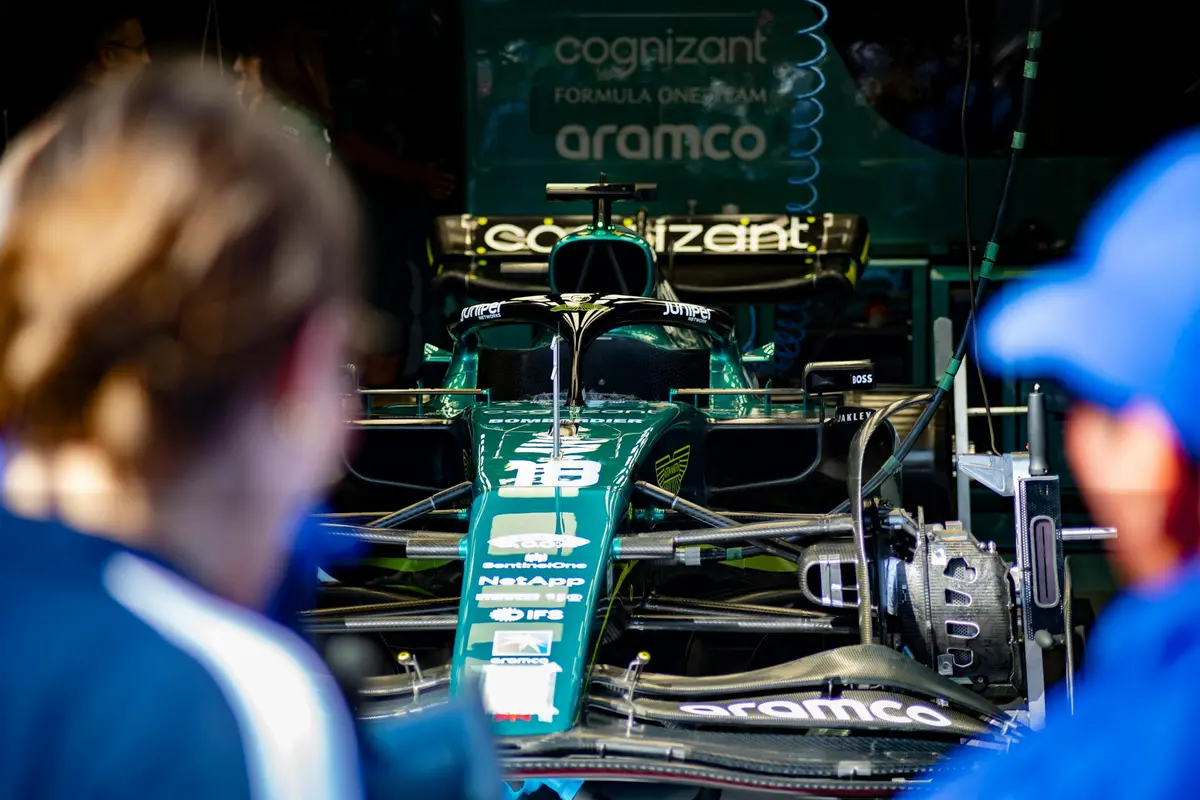
Aston Martin Reveals Major AMR26 Breakthrough at the Japanese Grand Prix
In a significant development for the Silverstone-based squad, Aston Martin Chief Trackside Officer Mike Krack has confirmed that the team achieved a meaningful technical breakthrough with the AMR26 at the Formula 1 Japanese Grand Prix. This revelation comes off the back of what Krack described as the team's first proper finish of the 2026 season, signalling that Aston Martin may finally be turning a corner after a challenging start to the new regulatory era. For a team that has invested heavily in infrastructure and talent, this moment carries real weight heading into the remainder of the campaign.
Detailed Analysis: What the AMR26 Breakthrough Means
The 2026 season introduced the most sweeping technical regulation changes in Formula 1's modern history, centred around radically revised aerodynamic philosophies and a new hybrid power unit formula. Teams across the grid have struggled in varying degrees to unlock the full potential of their new machinery, and Aston Martin has been no exception. The AMR26 has been visibly hampered by at least one significant performance issue that has compromised both qualifying pace and race-day execution.
Mike Krack's acknowledgment of a breakthrough is therefore notable precisely because of how candid it is. Chief Trackside Officers rarely headline major technical admissions mid-season without confidence that progress is real and repeatable. The fact that Krack specifically tied the breakthrough to one of the AMR26's "biggest problems" suggests this was not a marginal gain — it was a targeted fix to a fundamental weakness that had been dragging the team back in the early rounds.
While the exact nature of the problem was not disclosed in Krack's statement, the language used — "biggest problems plaguing" the car — implies a persistent, multi-session issue rather than a one-off anomaly. In the context of the 2026 regulations, common problem areas for teams at this stage include managing the interaction between the new active aerodynamic systems (Active Aero refers to moveable bodywork elements that adjust drag and downforce in real time depending on speed and driver input) and the revised energy deployment windows provided by the updated hybrid boost architecture.
Fernando Alonso and Lance Stroll now have a technical platform that, if this breakthrough proves durable, could allow them to extract lap time that had previously been inaccessible. The Japanese Grand Prix, held at Suzuka — a circuit that demands exceptional mechanical and aerodynamic balance — would be an extremely demanding environment in which to validate any fix. If the AMR26 showed genuine improvement there, it is a result that should translate well to a broad range of upcoming circuits.
Context: Aston Martin's 2026 Season Narrative
The Aston Martin AMR26 breakthrough arrives at a pivotal moment for a team that entered 2026 with sky-high ambitions. Having spent recent seasons constructing a state-of-the-art campus in Silverstone and luring some of the sport's top technical minds, the expectation was that Aston Martin would be a genuine front-running force under the new rules. The first few rounds, however, suggested the team had not fully cracked the 2026 package, leaving Alonso and Stroll fighting in the midfield rather than challenging for podiums.
The Japanese GP result — described as the team's first proper finish of the season — adds further context. Early-season reliability or performance-related retirements had limited the data and points the team could accumulate. A clean, competitive finish at Suzuka not only banks championship points but provides the engineers with a full race dataset to cross-reference against simulations, accelerating the development loop. In the ultra-competitive 2026 midfield, momentum gained now could compound significantly by mid-season.
Key Takeaways
- Aston Martin's Mike Krack confirmed a major technical breakthrough with the AMR26 at the Japanese Grand Prix, addressing one of the car's most persistent problems.
- The Japanese GP marked Aston Martin's first proper finish of the 2026 Formula 1 season, providing a critical full-race dataset for the engineering team.
- The AMR26 breakthrough could unlock performance for Fernando Alonso and Lance Stroll that had been unavailable in earlier rounds due to the underlying issue.
- Suzuka's demanding nature means any fix validated there is likely to be broadly effective across a wide variety of circuit types on the 2026 calendar.
Frequently Asked Questions
What was the major problem Aston Martin solved with the AMR26 at the Japanese GP?
Aston Martin Chief Trackside Officer Mike Krack confirmed that the team made a breakthrough on one of the biggest problems affecting the AMR26's performance. The specific technical detail was not publicly disclosed, but Krack's language indicated it was a persistent, fundamental issue rather than a minor setup concern that had been limiting the car throughout the early 2026 season.
How has the Aston Martin AMR26 performed in the 2026 F1 season so far?
The AMR26 has faced significant challenges in the opening rounds of the 2026 season, with the Japanese Grand Prix representing the team's first proper finish. Prior to Suzuka, performance and reliability issues had prevented Aston Martin from scoring consistently, leaving Fernando Alonso and Lance Stroll below expectations in the championship standings.
Could the AMR26 breakthrough push Aston Martin into championship contention in 2026?
If the breakthrough identified at the Japanese Grand Prix proves repeatable and durable across different circuit types, Aston Martin possesses the infrastructure, driver talent in Fernando Alonso and Lance Stroll, and engineering depth to climb the 2026 constructor standings rapidly. A reliable, well-understood car in the second half of the season could unlock a significant points haul.
Conclusion: What Comes Next for Aston Martin
The AMR26 breakthrough announced by Mike Krack represents exactly the kind of inflection point that can redefine a team's season. With the first proper finish of 2026 now secured at one of the calendar's most challenging venues, Aston Martin's engineers will be working around the clock to consolidate the gains made at the Japanese Grand Prix and ensure they carry forward reliably. Fernando Alonso, never one to accept mediocrity, will be pushing hard for the team to capitalise immediately. The 2026 season is long, and if Aston Martin has genuinely solved a core AMR26 weakness, the points table could look very different by summer.
In this article