Antonelli Chinese GP Win: Mercedes F1’s New Era in 2026
Andrea Kimi Antonelli secures a historic maiden victory for Mercedes F1 in China. We analyze the technical stats and 2026 implications ahead of Japan.
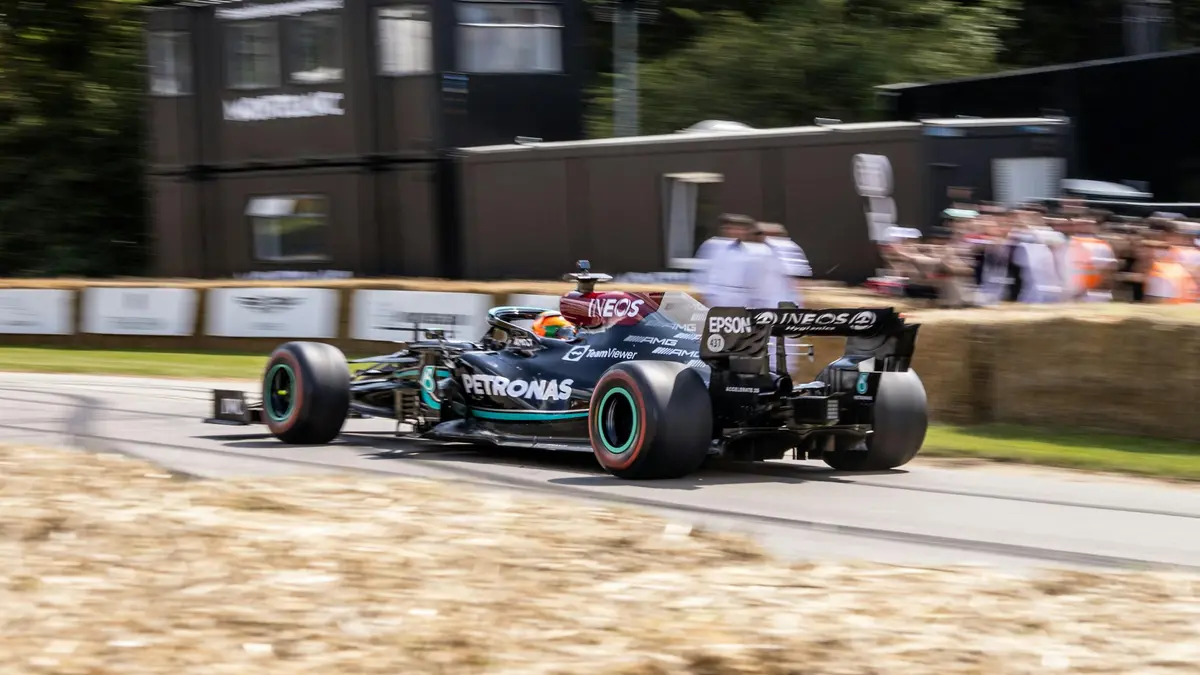
The Dawn of a New Prodigy: Analyzing the Antonelli Chinese GP Win
As the Formula 1 circus descends upon Suzuka for this weekend’s Japanese Grand Prix, the paddock is still buzzing from the seismic shift that occurred just over a week ago. The Antonelli Chinese GP win was not merely a victory; it was a statement of intent from Mercedes F1 and a confirmation that the 2026 technical regulations have found their first true master. At just 19 years old, Andrea Kimi Antonelli has silenced the skeptics, delivering a performance in Shanghai that blended veteran-like energy management with the raw, uncompromising pace that Toto Wolff banked on when he promoted the Italian to partner George Russell.
The significance of this victory cannot be overstated. Entering the 2026 season, the sport underwent its most radical transformation in decades, shifting to a 50/50 power split between the Internal Combustion Engine (ICE) and the Electrical Recovery System (ERS). In the complex environment of the Shanghai International Circuit, Antonelli demonstrated a superior understanding of the Manual Override—the 2026 energy deployment system that provides a tactical power boost to the following car—using it with surgical precision to dispatch Max Verstappen’s Red Bull in the closing stages of the race.
Technical Deep-Dive: How Mercedes Conquered Shanghai
The Antonelli Chinese GP win was underpinned by the W17’s exceptional integration of Active Aero. For those unfamiliar with the 2026 terminology, Active Aero refers to the system of movable front and rear wings designed to balance drag and downforce dynamically across a lap. While many teams struggled with the 'X-mode' (low drag) and 'Z-mode' (high downforce) transitions in the high-speed corners of Shanghai, Antonelli’s feedback allowed Mercedes to optimize the switching points, giving him a top-speed advantage without sacrificing stability in the technical middle sector.
Data from F1Technical suggests that Antonelli’s maiden victory was built on his ability to harvest energy under braking more efficiently than his teammate, George Russell. By maximizing the MGU-K recovery, Antonelli entered the long back straight with a full battery state-of-charge (SoC) nearly every lap. This allowed him to defend against the Cadillac of Sergio Pérez and eventually hunt down the leaders. The technical nuance required to manage the 2026 Power Units is immense, and for a rookie to achieve this so early in the season suggests that the Mercedes simulator program has reached a new level of fidelity.
The 2026 Narrative: Mercedes vs. The Field
Following the Antonelli Chinese GP win, the championship standings have taken a fascinating turn. Mercedes F1 now finds itself in a direct developmental war with Ferrari and McLaren. With Lewis Hamilton now wearing the scarlet of Ferrari and partnering Charles Leclerc, the narrative of the 'student surpassing the master' is already taking shape. Antonelli’s victory in China marks the first time a Mercedes junior has won a race for the Silver Arrows since the current regulatory era began, signaling a successful transition away from the Hamilton era.
The 2026 grid is more competitive than ever. Red Bull, now fielding Isack Hadjar alongside Verstappen, appears to be grappling with the complexities of their own in-house powertrain, while Audi and Cadillac have shown flashes of brilliance but lack the consistency of the Brackley-based squad. As we head into the Japanese Grand Prix, the focus shifts to whether Antonelli can replicate this form on a high-lateral-load circuit like Suzuka, which will test the W17’s Active Aero systems to their absolute limit.
Key Takeaways from Shanghai
- Strategic Mastery: Antonelli utilized the Manual Override boost at the optimal thermal window, preventing ERS derating on the final lap.
- Technical Adaptation: Mercedes has successfully calibrated their Active Aero to provide a seamless transition between high-downforce and low-drag modes.
- Grid Dynamics: The win places Antonelli as a legitimate title contender, disrupting the expected dominance of Verstappen and Hamilton.
- Reliability: Mercedes remains the only team to have both cars finish in the points in every session of the 2026 season so far.
Frequently Asked Questions
How does Andrea Kimi Antonelli’s win impact George Russell’s status at Mercedes F1?
While George Russell remains the senior driver in terms of experience, the Antonelli Chinese GP win establishes a dual-leader dynamic within Mercedes F1. Team Principal Toto Wolff has maintained that both drivers have equal status, but Antonelli’s rapid adaptation to the 2026 regulations puts pressure on Russell to respond at the upcoming Japanese Grand Prix.
What technical advantage did Mercedes have in the Chinese Grand Prix?
Mercedes appeared to have a superior deployment map for the 2026 Power Unit. Their ability to maintain high electrical output without hitting the 'clipping' point at the end of the straights was key to Antonelli’s overtaking maneuvers. Additionally, their Active Aero package showed less oscillation during high-speed transitions compared to the Red Bull and Ferrari designs.
Conclusion: Looking Ahead to Suzuka
The momentum from the Antonelli Chinese GP win carries Mercedes F1 into Japan with a renewed sense of confidence. Suzuka is a driver’s track, one that rewards precision and bravery—qualities Antonelli displayed in spades in Shanghai. However, the challenge will be different; the 'S' Curves will demand a perfect aerodynamic balance that the 2026 cars are still struggling to find. If Mercedes can unlock the same level of performance from their ERS-K recovery systems this weekend, we may be witnessing the start of a dominant run for the young Italian. All eyes are now on the Silver Arrows to see if they can turn a singular moment of brilliance into a sustained championship assault.