Mercedes F1 Antonelli Receives Hamilton Praise in China
Kimi Antonelli reveals a 'really nice' moment with Lewis Hamilton at the 2026 Chinese Grand Prix, signaling a new era for Mercedes F1.
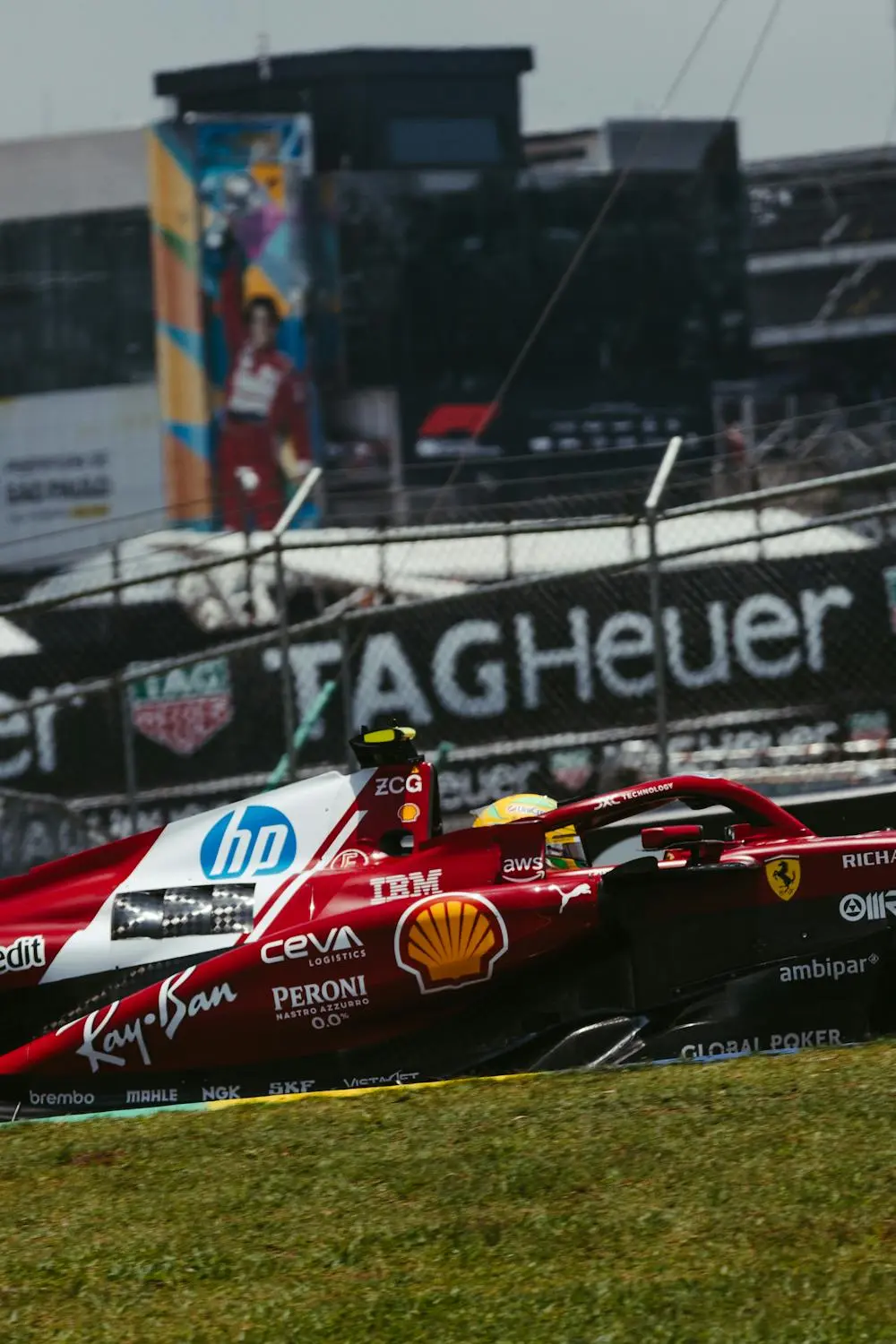
The Passing of the Torch at the Shanghai International Circuit
As the 2026 Formula 1 season intensifies, the narrative surrounding the Mercedes F1 team has shifted from technical recovery to the evolution of its driver lineup. On Wednesday, March 25, 2026, following the events of the Chinese Grand Prix, a poignant moment of sportsmanship came to light. Mercedes F1 Antonelli, the young Italian sensation tasked with filling the massive void left by Lewis Hamilton, revealed a private interaction with the seven-time world champion. Hamilton, now competing in the scarlet of Ferrari, reportedly offered "really nice" congratulations to his successor, signaling a respectful transition in an era defined by radical technical change.
The 2026 season represents a clean slate for the sport, with the introduction of the much-anticipated power unit regulations and active aerodynamics. For a rookie like Andrea Kimi Antonelli, navigating these complexities while under the microscope of the Silver Arrows' legacy is a monumental task. The endorsement from Hamilton is not merely a social nicety; it is a validation of Antonelli's adaptation to the most complex machinery in racing history. In an environment where every millisecond is scrutinized, such a gesture from a direct rival—and a former team icon—carries significant weight in the paddock.
Detailed Analysis: The Significance of the Hamilton-Antonelli Interaction
To understand why this interaction matters, one must look at the technical and psychological pressure cooker that is Mercedes F1 Antonelli's current reality. The 2026 cars utilize a 50/50 power split between the Internal Combustion Engine (ICE) and the Energy Recovery System (ERS). Managing this balance requires a sophisticated understanding of the "Manual Override"—a 2026-specific ERS deployment mode that allows drivers extra electrical power to assist in overtaking when within a certain distance of the car ahead. For Hamilton to recognize Antonelli's performance in China suggests that the rookie is mastering these new systems with veteran-like composure.
Furthermore, the Chinese Grand Prix is notorious for its demanding front-limited nature, particularly through the "Snails" of Turns 1 and 2. The 2026 cars, equipped with "Active Aero" (movable wing elements designed to reduce drag on straights and increase downforce in corners), require a delicate touch to prevent mid-corner instability. Antonelli’s ability to extract performance from the W17 chassis in these conditions has clearly caught the eye of his predecessor. Hamilton’s praise likely centers on Antonelli’s management of the "Boost Button"—the driver-activated control for the 350kW MGU-K deployment—which is critical for defending positions on Shanghai’s long back straight.
From a team perspective, Toto Wolff has been vocal about fostering a supportive environment for Antonelli. Having Hamilton, the man who defined the modern Mercedes era, offer his blessing helps mitigate the inevitable comparisons. It allows Antonelli to carve out his own identity within the team, supported by George Russell, while maintaining a bridge to the team's golden era. This psychological boost is invaluable as the team battles against the likes of Red Bull and a resurgent Ferrari in the constructors' standings.
Context: Mercedes F1 in the 2026 Narrative
The 2026 season has been a whirlwind of technical innovation. Mercedes F1 entered the year with a bold philosophy regarding their power unit integration, aiming to maximize the thermal efficiency of their new sustainable fuel ICE. While the early rounds showed promise, the Chinese Grand Prix served as a litmus test for their aerodynamic efficiency. The interaction between Mercedes F1 Antonelli and Hamilton highlights the human element amidst this technological arms race. While engineers obsess over MGU-K saturation points and drag coefficients, the drivers are the ones who must translate that data into lap times.
The current grid is perhaps the most competitive in a decade. With Audi and Cadillac entering the fray, and the technical partnership between TGR Haas and Toyota deepening, there is no room for error. Mercedes is currently in a rebuilding phase, focusing on the synergy between Russell’s experience and Antonelli’s raw speed. Hamilton’s move to Ferrari was the catalyst for this change, and his continued interest in the progress of his former team—and specifically his replacement—adds a layer of intrigue to the 2026 championship battle.
Key Takeaways
Symbolic Transition: Lewis Hamilton’s congratulations to Kimi Antonelli at the Chinese Grand Prix marks a formal "passing of the torch" within the Mercedes F1 ecosystem.
Technical Mastery: Antonelli’s performance in China demonstrates a rapid adaptation to 2026 regulations, including Active Aero and Manual Override systems.
Paddock Respect: Despite the intense rivalry between Mercedes and Ferrari, the mutual respect between the veteran and the rookie remains a core narrative of the 2026 season.
Strategic Stability: The positive relationship between the two drivers helps stabilize the Mercedes team environment during a period of significant technical transition.
Frequently Asked Questions
How has Mercedes F1 adapted to the 2026 power unit regulations?
Mercedes F1 has focused on a high-efficiency ERS-K system to balance the 50/50 power split required by the 2026 rules. Their power unit is designed to maximize energy harvesting under braking to ensure the "Boost Button" is available for critical overtaking maneuvers.
What is the role of Andrea Kimi Antonelli within the Mercedes F1 2026 lineup?
Andrea Kimi Antonelli serves as a primary race driver alongside George Russell. He is tasked with bringing a fresh perspective to the development of the W17, specifically focusing on the integration of Active Aero and the new sustainable fuel ICE parameters.
How does the "Manual Override" work in the 2026 Mercedes F1 car?
The Manual Override is a driver-controlled ERS deployment that provides an additional power boost. In the Mercedes W17, this is managed through a sophisticated steering wheel interface that Antonelli has been praised for using effectively during the Chinese Grand Prix.
Conclusion
The revelation of Lewis Hamilton’s kind words toward Mercedes F1 Antonelli at the Chinese Grand Prix provides a rare glimpse into the camaraderie that exists behind the visor. As the 2026 season progresses, the focus will inevitably return to the fierce competition on track and the relentless development of the new-generation cars. However, for a young driver like Antonelli, the support of a legend like Hamilton is a powerful asset. As the circus moves toward the next European leg of the season, all eyes will be on the Silver Arrows to see if they can convert this positive momentum into consistent podium finishes. The future of Mercedes F1 looks bright, and with the blessing of its greatest champion, Kimi Antonelli is well-positioned to lead the team into this new era.