Andretti’s Long Beach Legend: The First American Home Victory (1977)
Mario Andretti became the first American to win a home GP on April 3, 1977, driving the iconic Lotus 78 ground-effect car at Long Beach.
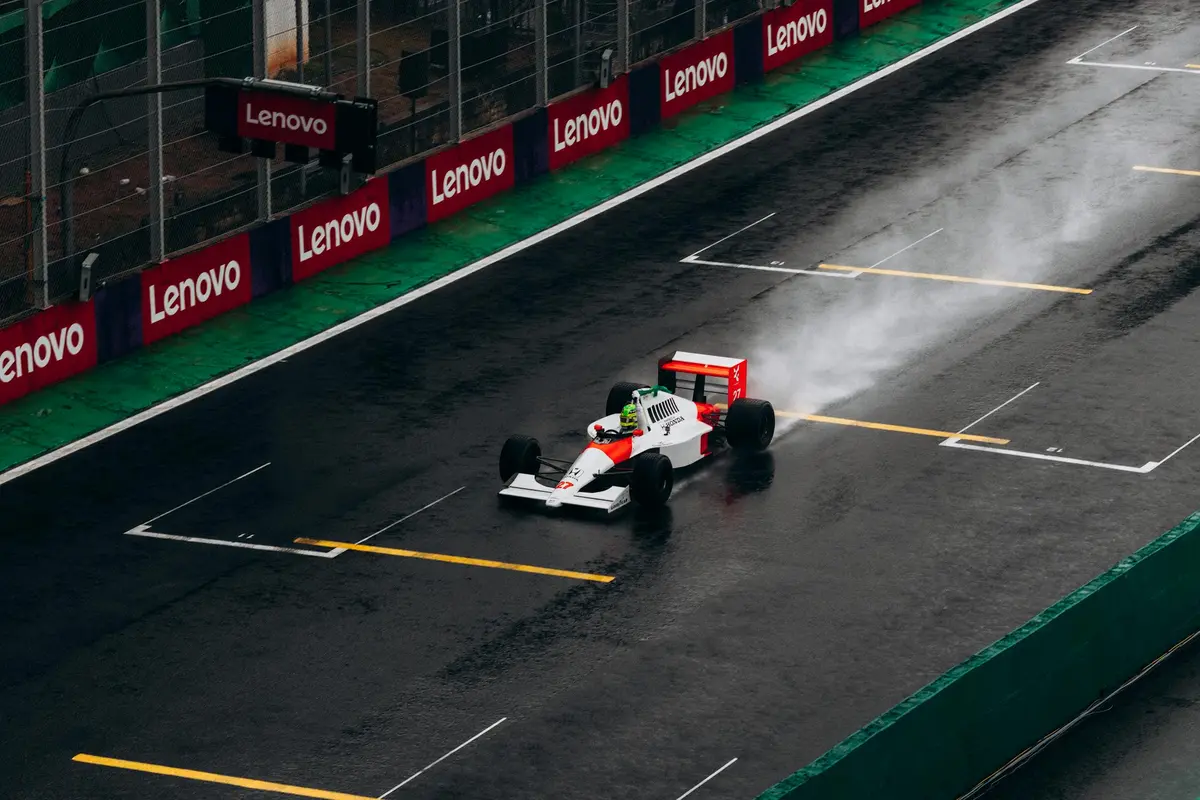
On April 3, 1977, Mario Andretti secured a landmark victory at the United States Grand Prix West in Long Beach. Driving the revolutionary Lotus 78-Ford, he became the first American to win a Formula 1 race on home soil, triumphing after an intense late-race pursuit of Jody Scheckter’s Wolf WR1.
The Streets of Long Beach
The 1977 season was a turning point for technical innovation, and the streets of Long Beach provided the ultimate amphitheater for a mechanical gladiatorial contest. Mario Andretti arrived in California with a car that was beginning to frighten the paddock: the Lotus 78. Designed under the visionary guidance of Colin Chapman, Tony Southgate, and Peter Wright, this was the first true "ground effect" car, utilizing contoured sidepods to create a vacuum that sucked the chassis to the tarmac.
However, the race was anything but a foregone conclusion. For 76 grueling laps, the crowd of 70,000 watched a high-speed chess match between three of the era’s titans: Jody Scheckter in the surprisingly nimble Wolf WR1, Niki Lauda in the powerhouse Ferrari 312T2, and Andretti in the black-and-gold Lotus.
A Masterclass in Pressure
Jody Scheckter had seized the lead at the start, capitalizing on the raw torque of the Ford Cosworth DFV engine to hold off the field. Mario Andretti, however, remained glued to the Wolf’s exhaust. The Mario Andretti Lotus 78 package was demonstrably faster in the corners, but the narrow street circuit made overtaking a perilous gamble. For lap after lap, Andretti probed for a weakness, keeping his Goodyear tyres in the optimal operating window while waiting for Scheckter’s rhythm to break.
The breakthrough came on lap 77. Scheckter began to struggle with a slow puncture in his front-right tyre. Sensing blood in the water, Andretti lunged down the inside at the end of the long Shoreline Drive straight. The crowd erupted as the American took the lead. Niki Lauda also managed to demote Scheckter, but there was no catching the Lotus. Andretti crossed the line to become the first American ever to win a Grand Prix in the United States, a feat that remains etched in the annals of the sport.
The Dawn of Ground Effect
Technically, this race proved that Colin Chapman’s aerodynamic gamble had paid off. The Lotus 78 was not just a car; it was a laboratory on wheels. While other teams were still focused on reducing frontal area, Lotus was looking at the airflow beneath the car. The use of "skirts" to seal the low-pressure area under the sidepods gave Andretti a level of mechanical grip that his rivals simply could not match without sacrificing straight-line speed.
This victory was more than just points in the championship; it was the validation of a concept that would define the next five years of Grand Prix racing. As Mario Andretti stood on the podium, flanked by Lauda and Scheckter, the era of the modern aerodynamic race car had officially arrived.
In this article