Aston Martin ADUO Lifeline: 2026 F1 Rule Explained
F1's new ADUO rule offers Aston Martin and Honda a crucial development lifeline in 2026. Here's what it means and why it matters.
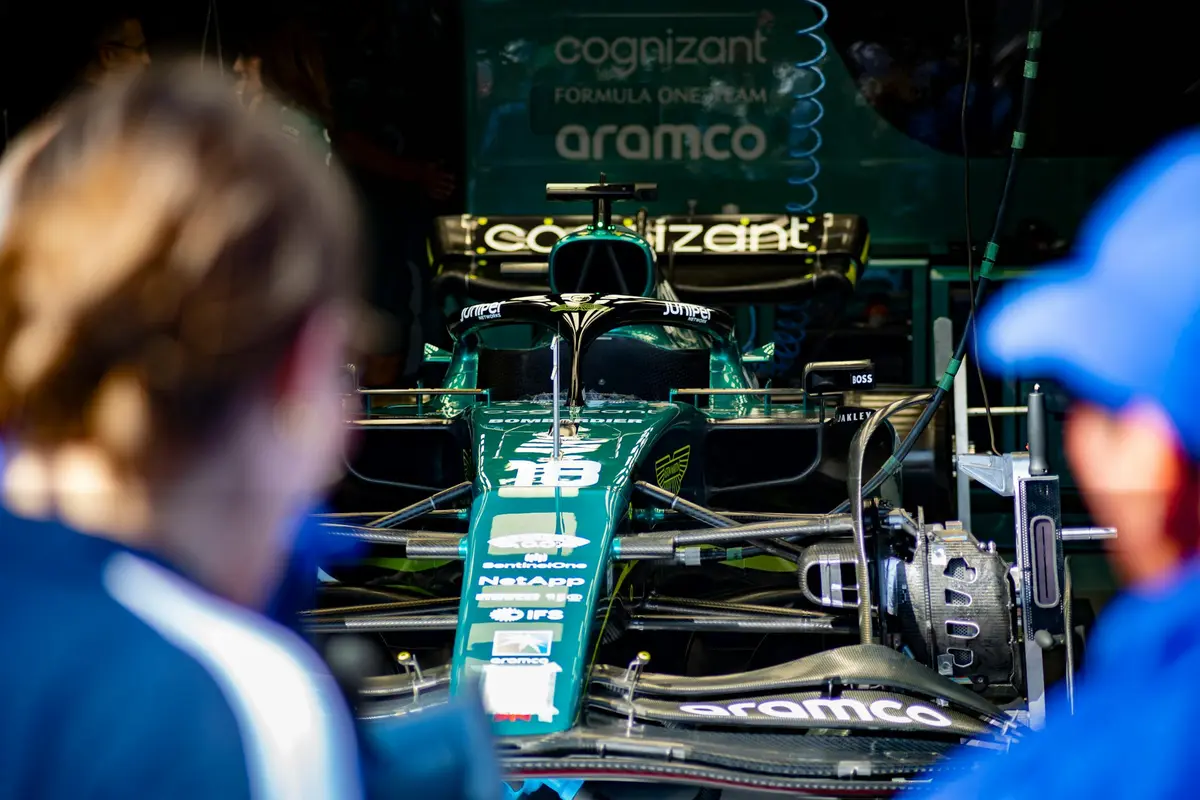
Aston Martin's ADUO Lifeline: What F1's New Development Rule Means in 2026
Further clarity has emerged on one of Formula 1's most significant new regulatory mechanisms for the 2026 season: the ADUO (Additional Development and Upgrade Opportunities) programme. Designed as a structured lifeline for struggling constructors, ADUO has attracted significant attention due to its potential impact on Aston Martin and their engine partner Honda. As both parties navigate a turbulent transition under the sweeping 2026 technical regulations, understanding exactly how ADUO works — and who stands to benefit most — is critical to any honest analysis of the midfield and beyond this season.
What Is ADUO and How Does It Work?
ADUO — Additional Development and Upgrade Opportunities — is a regulatory framework introduced by the FIA and Formula 1 to allow teams that are performing below a defined competitive threshold to access additional aerodynamic and mechanical development tokens or wind-tunnel time beyond what the standard Resource Restriction Agreement (RRA) permits. In simple terms, it is a performance-based handicap system designed to prevent the grid from stratifying irreversibly, particularly in the early phases of a radical new regulatory era.
The 2026 season represents arguably the most dramatic technical reset in a generation, combining entirely new power unit regulations — featuring a 50/50 split between internal combustion and electrical energy deployment — with a revolutionary active aerodynamics philosophy. Active Aero refers to bodywork systems that physically adjust their geometry in real time to balance drag reduction on straights against downforce generation in corners, replacing the traditional DRS system entirely. In such a complex environment, the development learning curve is steep, and ADUO exists specifically to ensure that teams caught on the wrong side of that curve are not condemned to irrelevance for an entire season.
The mechanism is particularly relevant for Aston Martin, who arrived in 2026 facing the dual challenge of adapting to the new chassis regulations while simultaneously integrating Honda's new power unit architecture. Sources have indicated that the ADUO framework could provide the Silverstone-based outfit with meaningful additional development runway — a potentially crucial advantage in clawing back performance deficit if their initial 2026 car concept requires significant recalibration.
Why Aston Martin and Honda Are Central to the ADUO Conversation
The pairing of Aston Martin and Honda was widely heralded as one of the most exciting technical collaborations of the new era. Honda's return to F1 as a works power unit supplier — following their exit from the Red Bull partnership — brought enormous expectations. However, the 2026 power unit regulations, which mandate a dramatically higher electrical energy recovery and deployment ratio than any previous F1 hybrid architecture, have presented every manufacturer with formidable engineering challenges.
For Aston Martin specifically, the ADUO lifeline matters because their competitiveness in 2026 is not solely a chassis question. The integration between the Honda power unit and the car's aerodynamic and energy management systems is deeply interdependent under the new regulations. The Boost Button — colloquially used to describe a driver-activated maximum electrical deployment mode — and associated energy harvesting strategies are intimately linked to how the car is packaged aerodynamically. If early-season data suggests a fundamental mismatch in this integration, ADUO would theoretically give Aston Martin the regulatory space to accelerate corrective development work.
Fernando Alonso, who brings unparalleled experience managing technical transitions across different regulatory eras, and Lance Stroll will be the on-track barometers of whether the ADUO allocation translates into tangible lap time. Both drivers have the technical feedback capability to direct engineers toward the most productive development avenues, but they need the regulatory bandwidth to actually execute those improvements — which is precisely what the Aston Martin ADUO opportunity could provide.
Broader 2026 Season Context
The 2026 regulations have reshuffled the competitive hierarchy in ways that were difficult to predict even twelve months ago. Teams like McLaren, Ferrari, Red Bull, and Mercedes entered the season with vastly different power unit partnerships and aerodynamic philosophies. The introduction of ADUO reflects a broader acknowledgment by F1's governing structures that in a year of such radical change, performance parity cannot be assumed — it must be actively managed.
Aston Martin are not alone in potentially benefiting from ADUO; the programme is available to any team that falls within the qualifying performance threshold. However, their specific situation — a new works power unit partnership combined with a fundamentally new chassis concept — makes them one of the most closely watched candidates for the scheme. The clarity now offered on ADUO's mechanics is welcome news for the team's strategic planners at Silverstone, who will be mapping out a development roadmap that could define the arc of their entire 2026 campaign and lay the groundwork for future seasons.
Key Takeaways
- ADUO (Additional Development and Upgrade Opportunities) is a new FIA framework granting struggling teams extra development resources beyond standard RRA limits in 2026.
- Aston Martin and their Honda power unit partnership are identified as potential primary beneficiaries of the ADUO mechanism this season.
- The programme is especially significant in 2026 given the scale of the technical reset, including new active aerodynamics and a 50/50 ICE-electrical power unit split.
- ADUO does not guarantee performance gains — it provides additional development opportunity, which teams must then exploit effectively through engineering execution and driver feedback.
Frequently Asked Questions
How could ADUO specifically help Aston Martin's 2026 F1 season?
ADUO could give Aston Martin access to additional aerodynamic development time and upgrade tokens beyond the standard allocation. This is particularly valuable if their Honda-powered 2026 car requires significant recalibration in the early stages of the season, allowing the team to accelerate corrective work without breaching the Resource Restriction Agreement.
Does the Aston Martin ADUO eligibility affect Fernando Alonso's championship prospects in 2026?
Directly, ADUO affects the team's development trajectory rather than Alonso's individual race results in the short term. However, if the additional development resources allow Aston Martin to close a performance gap more rapidly than would otherwise be possible, Alonso and Lance Stroll could both find themselves in more competitive machinery sooner in the season — which would have meaningful implications for championship points accumulation.
What is the relationship between Aston Martin, Honda, and the ADUO programme in 2026?
Aston Martin uses Honda as their works power unit supplier in 2026 — a new partnership aligned with F1's dramatic new hybrid regulations. ADUO is relevant to both parties because under the new rules, chassis and power unit integration is more critical than ever. Any ADUO allocation secured by Aston Martin would support development work on the full car package, including how the Honda unit interfaces with the car's aerodynamic and energy management systems.
Conclusion: A Development Lifeline That Could Define Aston Martin's 2026 Trajectory
The emergence of further clarity around the Aston Martin ADUO situation is one of the more consequential regulatory stories of the early 2026 season. In a year defined by unprecedented technical complexity — active aerodynamics, new power unit architectures, and a completely restructured competitive order — the ability to access additional development resources could be the difference between a team finding its footing quickly or spending the majority of the year chasing fundamental problems. For Aston Martin and Honda, ADUO represents not just a regulatory safety net, but a genuine strategic tool. How the team deploys it will be one of the defining sub-plots of the 2026 championship.