Alonso Slams 2026 Fast Corners as Charging Stations
Fernando Alonso slams the 2026 F1 rules, calling high-speed corners 'charging stations' — and it has real implications for Aston Martin's season.
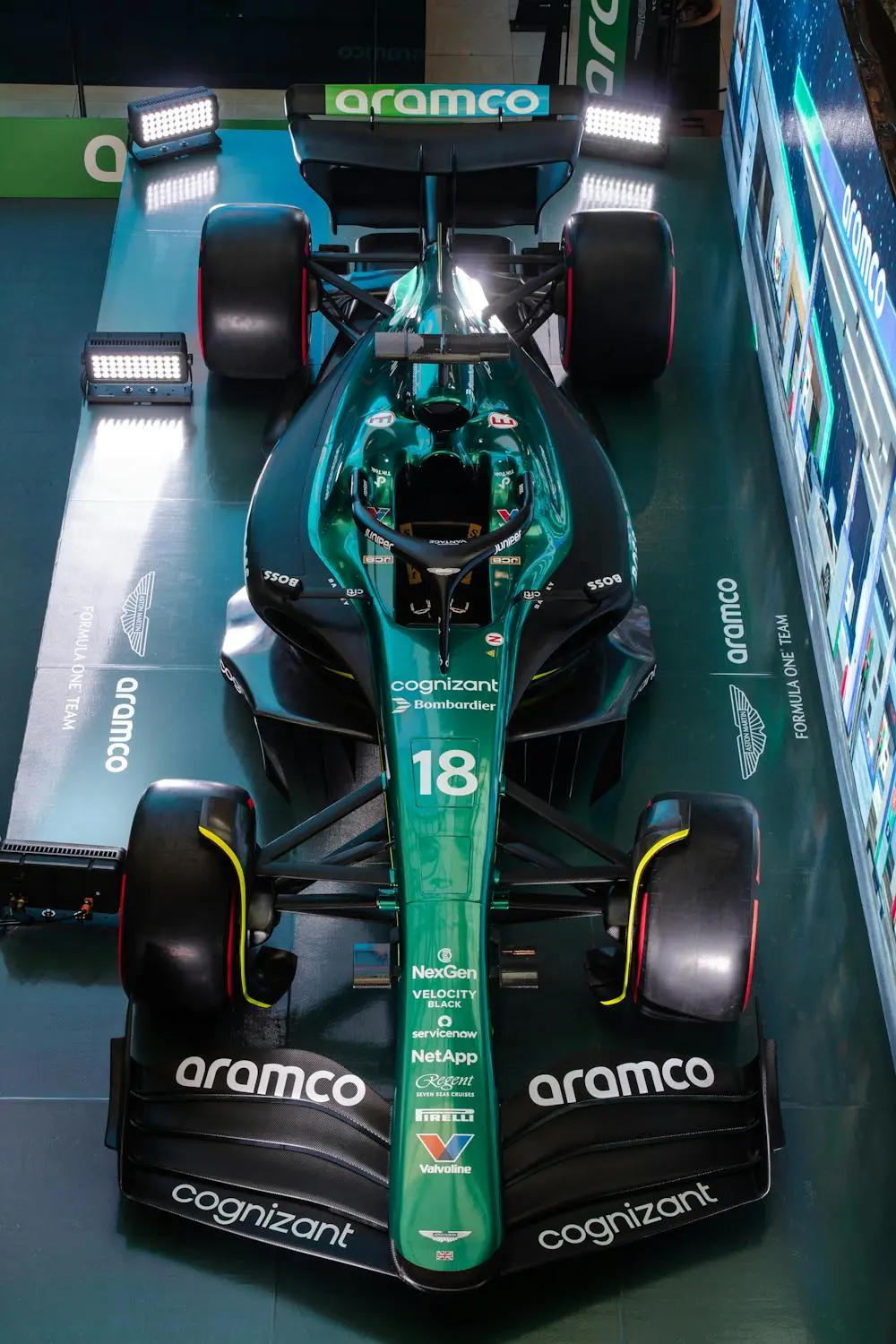
Fernando Alonso Laments the Loss of High-Speed Cornering in 2026 F1
Fernando Alonso has delivered one of the most striking critiques of the 2026 Formula 1 regulations yet, likening the transformation of high-speed corners into what he describes as 'charging stations' for the new hybrid power units. The Aston Martin driver's comments cut to the heart of a fundamental philosophical shift in how circuits are now experienced under the 2026 ruleset. For a driver of Alonso's pedigree — a two-time World Champion who has navigated every major regulatory era of the modern sport — his lament carries significant weight. The loss of flat-out, high-speed cornering is not merely an aesthetic concern; it represents a deep technical and competitive restructuring of Formula 1 itself.
Detailed Analysis: Why Fast Corners Have Become 'Charging Stations'
The 2026 regulations introduced a dramatically revised hybrid architecture, placing unprecedented emphasis on the electrical deployment side of the power unit. Under the new framework, the energy recovery systems are vastly more powerful than in previous generations, but they are also more dependent on specific deployment windows. High-speed corners — previously the domain of raw aerodynamic grip and driver bravery — have, under these regulations, evolved into moments where drivers and engineers strategically harvest or deploy electrical energy rather than simply attacking the apex at maximum speed.
Alonso's 'charging stations' analogy is brilliantly precise. In essence, what were once the most thrilling segments of any lap have been repurposed by engineering necessity. The 2026 power units feature a Manual Override function — a driver-activated system that governs the precise moment of full electrical deployment — meaning that corners like Copse, Blanchimont, or the iconic 130R at Suzuka are now calculated energy management zones as much as they are tests of aerodynamic excellence and driver courage.
For Aston Martin, this has specific competitive implications. The team's AMR26 has been engineered around the new regulations, and how efficiently its power unit — supplied by Honda — manages energy through these high-speed sections will directly determine its pace relative to rivals. If the Aston Martin package can harvest more aggressively through fast corners while maintaining composure, that represents a genuine competitive edge. Conversely, if the car struggles to balance mechanical grip with energy recovery in those zones, Alonso's frustration may also translate into a strategic disadvantage on certain circuit layouts.
The 2026 Active Aero system — moveable aerodynamic surfaces that automatically adjust drag and downforce profiles at high speed — adds yet another layer of complexity. As the car transitions through a fast corner, the Active Aero interacts with energy recovery systems in real time, making the driver's job exponentially more about system management than pure instinct. Alonso, whose career was forged in eras where these corners demanded raw commitment, clearly finds this evolution a departure from Formula 1's fundamental identity.
Context: Where This Fits in the 2026 Season Narrative
Alonso's comments are not delivered in a vacuum. The 2026 season has already sparked intense debate within the paddock about the character of the racing product under the new regulations. The shift toward heavier electrical dependency was designed, in part, to align Formula 1 with global sustainability narratives — but the sporting consequences are now being felt and voiced by the very athletes at the centre of the action.
For Aston Martin specifically, navigating this landscape is a critical subplot of their 2026 campaign. The team enters this season with serious ambitions of competing at the front of the midfield and potentially challenging the top teams on specific circuit profiles. Alonso's public commentary on the regulations may also serve a secondary purpose: framing expectations and applying subtle pressure on the FIA and Formula 1 management to consider the sporting spectacle of high-speed corners in future regulatory adjustments.
His voice, respected across the paddock and within governance circles, ensures this is not a comment that will be easily dismissed. Other drivers — from George Russell at Mercedes to Max Verstappen at Red Bull — have similarly expressed varied degrees of frustration or adaptation anxiety regarding the 2026 formula, suggesting Alonso is articulating a broader sentiment.
Key Takeaways
- Fernando Alonso has publicly criticised the 2026 F1 regulations for transforming high-speed corners into energy management 'charging stations' rather than pure driving challenges.
- The 2026 hybrid architecture, with its powerful electrical deployment systems and Manual Override function, fundamentally changes how fast corners are approached by drivers and engineers alike.
- For Aston Martin, how efficiently the AMR26 manages energy recovery through high-speed sections will be a key differentiator in its 2026 competitiveness.
- The Active Aero system — which automatically modulates downforce and drag at speed — interacts dynamically with energy recovery, adding complexity to what were once instinct-driven corners.
- Alonso's comments reflect a wider paddock debate about whether the 2026 regulations sacrifice spectacle for technical and sustainability ambitions.
Frequently Asked Questions
How do the 2026 F1 regulations affect Aston Martin's race strategy at high-speed circuits?
Under the 2026 rules, Aston Martin must carefully calibrate its Honda power unit's energy deployment through fast corners. Circuits with extended high-speed sections demand a precise balance between harvesting energy and deploying it for outright pace, making race strategy on those layouts significantly more complex for the AMR26 than it would have been under previous regulations.
What has Fernando Alonso said about the 2026 F1 fast corners change?
Alonso has lamented the transformation of fast corners in 2026, describing them as resembling 'charging stations' for electric cars rather than the pure high-speed challenges they represented in previous regulatory eras. His comments highlight a frustration with how energy management priorities have reshaped the most iconic segments of a Formula 1 lap.
Can Aston Martin exploit the 2026 energy recovery rules to gain a competitive advantage?
Potentially, yes. If the AMR26 and its Honda power unit are optimised to harvest and redeploy electrical energy more efficiently than rivals through high-speed corners, Aston Martin could gain meaningful lap time. However, this requires a sophisticated interplay between the Active Aero system, the Manual Override deployment function, and the mechanical setup of the car — a challenge the team's engineers are actively working to master.
Conclusion: A Champion's Verdict on Formula 1's New Era
Fernando Alonso's 'charging stations' critique is a landmark moment in the 2026 season's evolving narrative. It crystallises a tension that sits at the core of the new regulations: the pursuit of electrification and energy efficiency versus the raw, visceral spectacle that defines Formula 1's greatest corners. For Aston Martin, this debate is not merely philosophical — it is lived out lap by lap in how the AMR26 performs through the fastest sections of every circuit. How the team and Alonso adapt to, and perhaps influence, this new reality will be one of the most compelling storylines of the 2026 campaign.