Aston Martin Honda 2026: Adrian Newey Reveals Development Shock
Adrian Newey reveals a major development shock for Aston Martin Honda, discovering the 2026 PU was in a 'different state' as late as November 2025.
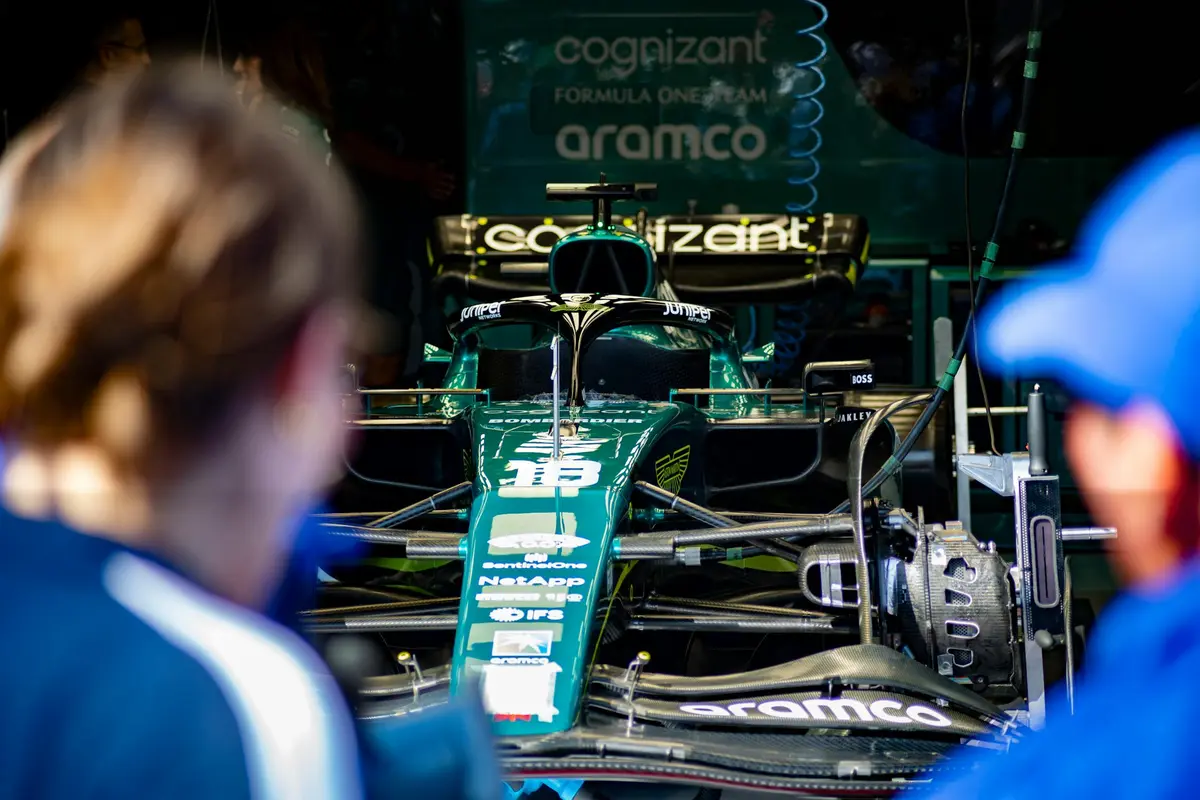
The Melbourne Paddock Reacts to Newey’s Revelation
As the 2026 Formula 1 season kicks off under the bright lights of Melbourne, the technical narrative has taken a sharp turn away from the stopwatch and toward the drawing board. While the initial media frenzy on this Friday focused heavily on the logistical nuances of Honda’s battery supply, a far more significant story emerged from the Aston Martin garage. Adrian Newey, the mastermind behind the AMR26, dropped a bombshell regarding the Aston Martin Honda partnership that has sent ripples through the pit lane. According to Newey, the team was operating under a set of assumptions that were fundamentally challenged as late as November 2025.
The revelation that the Aston Martin Honda project discovered a "completely different state" of power unit development just months before the season opener is unprecedented for a team with championship aspirations. In an era defined by the most radical technical overhaul in a generation, such a late-stage realization regarding the Power Unit (PU) architecture could be the difference between leading the pack and languishing in the midfield. For Fernando Alonso and Lance Stroll, the implications are as much about reliability as they are about raw performance.
Detailed Analysis: The November Pivot
To understand the gravity of Newey’s comments, one must look at the 2026 technical regulations. The shift to a 50/50 power split between the Internal Combustion Engine (ICE) and electrical energy requires a level of integration between the chassis and the PU that exceeds anything seen in the hybrid era. When Newey suggests that the Aston Martin Honda project was in a different state than expected in November 2025, he is likely referring to the energy recovery system's thermal footprint or the physical packaging of the battery energy store.
In F1 design cycles, November is typically the month when the chassis is frozen for final production and crash testing. If the Honda PU's dimensions or cooling requirements shifted at that late stage, the aerodynamic map of the AMR26 would have been thrown into chaos. Newey is famous for his tight packaging, often pushing cooling limits to the absolute edge to maximize floor performance. A late change in the "state" of the Honda project suggests that the team had to perform a frantic redesign of the rear suspension geometry or the sidepod internals to accommodate the reality of the Japanese manufacturer's hardware.
Furthermore, the mention of battery availability in Melbourne highlights a potential bottleneck in Honda's supply chain. In 2026, the Manual Override—a driver-activated electrical boost designed to aid overtaking—places immense strain on the energy store. If the "different state" Newey mentioned involves the efficiency of these cells, Aston Martin may be forced to run conservative engine maps during this opening weekend to ensure survival, rather than chasing outright lap time.
Context: The 2026 Narrative and Technical Hurdles
The 2026 season is not just a new year; it is a total reset. With the introduction of Active Aero—systems that adjust wing angles in real-time to balance downforce and drag—the interaction between the engine's power delivery and the car's drag profile is critical. If the Aston Martin Honda power unit is producing a different torque curve than the simulations predicted in late 2025, the software mapping for the Active Aero will be fundamentally flawed.
For a team that has invested heavily in a new wind tunnel and recruited the greatest designer in history, starting on the back foot due to a communication lag with their engine partner is a bitter pill to swallow. However, Newey’s willingness to speak openly about this on Friday in Melbourne suggests a level of confidence in their ability to recover. The 2026 grid is incredibly competitive, with Ferrari’s Lewis Hamilton and Red Bull’s Max Verstappen showing immense pace, leaving no room for integration errors between Silverstone and Sakura.
Key Takeaways
- Late Discovery: Aston Martin only realized the true state of the Honda PU project in November 2025, forcing potential late-stage design compromises.
- Packaging Challenges: Adrian Newey’s signature tight packaging may have been compromised by unexpected cooling or dimensional requirements from the Honda unit.
- Battery Focus: While the media focused on battery counts, the underlying issue is the fundamental integration of the 2026 power architecture.
- Championship Impact: This delay could affect the AMR26’s ability to utilize Active Aero and Manual Override systems effectively in the early rounds.
Frequently Asked Questions
How will the late Honda PU data affect Fernando Alonso’s performance?
The late realization regarding the Honda power unit's state likely forced Aston Martin to adopt a more conservative aerodynamic and cooling package for the start of the 2026 season. This could mean Alonso has to manage thermal issues more than his rivals at Ferrari or Red Bull during the early races.
What does the "different state" of the Honda project mean for Aston Martin's 2026 car?
It typically refers to a discrepancy between the simulated performance/dimensions of the power unit and the actual hardware delivered. For a designer like Adrian Newey, this often necessitates a redesign of the car's rear end, affecting both mechanical grip and aerodynamic efficiency.
Conclusion: Looking Ahead from Melbourne
As we move toward the first qualifying session of this new era, the Aston Martin Honda story remains the most intriguing technical subplot in the paddock. Adrian Newey has built a career on turning technical challenges into competitive advantages, but the November 2025 timeline is a hurdle even for him. The focus now shifts to how quickly the team can iterate on their initial design. If the AMR26 shows competitive pace despite these late-stage hurdles, it will be a testament to the genius of the Silverstone technical team. However, if they struggle with the Manual Override deployment or thermal management in the race, we will know exactly where the roots of those problems lie.